Why This Ancient Story is Trending Right Now
If your feed’s been flooded with clips of a shepherd taking down a giant, you’re not alone. Amazon Prime’s “House of David” became a streaming sensation in 2025, pulling in 22 million viewers in its first 17 days and delivering two complete seasons within the same year. That’s not church group numbers, that’s Marvel-level viewership for a story that’s literally thousands of years old.
So what makes this show different from every other biblical adaptation you’ve scrolled past? Let’s break it down.
The Story You Think You Know (But Actually Don’t)
Everyone knows the David vs. Goliath highlight reel. Underdog shepherd boy, giant bully, one stone, game over. But “House of David” takes that two-minute Sunday School lesson and expands it into an eight-episode psychological thriller about power, faith, and family dysfunction that would make your Thanksgiving dinner look peaceful.
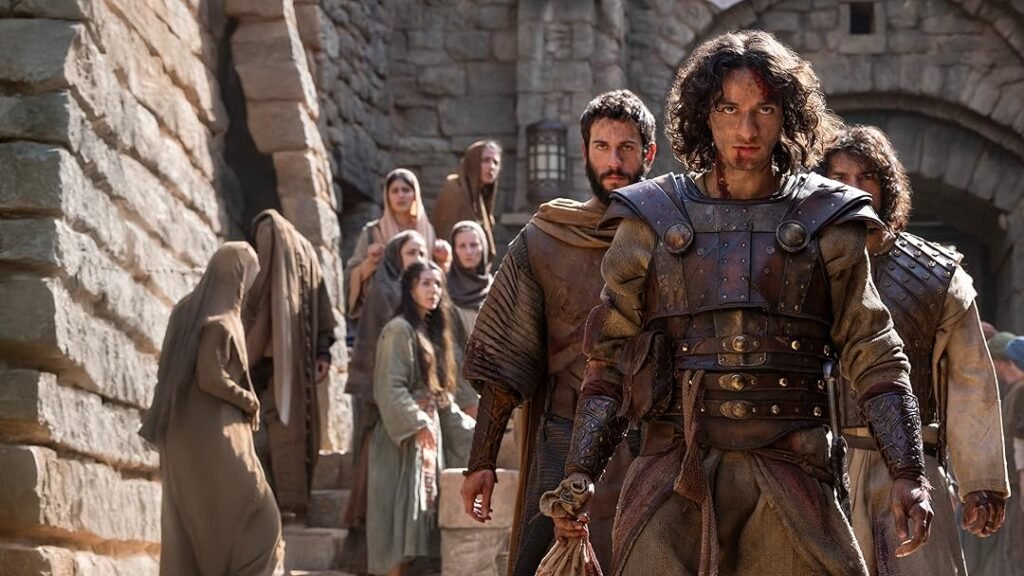
Set in 1000 BC Israel, the series follows David (played by newcomer Michael Iskander) from his rough childhood as a shepherd to his destiny as one of history’s most famous kings. But this isn’t your grandma’s Bible story. The show dives deep into the messy human drama: King Saul’s mental breakdown, palace intrigue that rivals “Game of Thrones,” and a young David wrestling with doubt, guilt, and whether he’s actually ready for his divine calling. Season 2 continues the journey, showing what happens after the giant falls, the political complexities and personal costs of ascending to power.
What Makes This Show Actually Good
Production Quality That Rivals Hollywood Blockbusters
Filmed across Greece and Canada with over 700 crew members, this isn’t some low-budget faith film. We’re talking sweeping battle sequences, authentic ancient architecture, and cinematography that makes the Valley of Elah look like Middle-earth. The production team scouted locations in Morocco, Jordan, Italy, and Israel before settling on their final filming spots, ensuring every frame feels historically grounded.
The Goliath reveal alone is worth streaming. British bodybuilder Martyn Ford (6’8”, 320 pounds in real life) was enhanced using forced perspective and digital effects to appear 9’9” tall. The result? A genuinely terrifying villain that makes you understand why entire armies were shaking in their sandals.
Characters With Actual Depth
This is where “House of David” separates itself from typical religious content. These aren’t cardboard cutouts reciting scripture. King Saul (Ali Suliman) is a tragic figure, a once-great leader slowly losing his grip on reality, haunted by visions and unable to distinguish friend from enemy. His performance captures a man watching his own kingdom slip through his fingers.
David isn’t presented as the perfect hero either. The series shows him as flawed, doubting, and initially reluctant to accept his role. He’s dealing with family trauma, self-doubt, and the massive pressure of knowing you’re supposed to be king while you’re still just trying to keep your sheep alive.
Princess Michal (Indy Lewis) and Prince Jonathan (Ethan Kai) aren’t background characters, they have their own arcs, motivations, and conflicts that drive the narrative forward. Even the villains feel three-dimensional.
A Story Made for Streaming
Directors Jon Erwin and Jon Gunn (the team behind “Jesus Revolution”) knew they weren’t making this for just religious audiences. They’ve cited “Lord of the Rings,” “Star Wars,” and “Harry Potter” as influences, and it shows. This is an epic fantasy built on historical events, treating the source material with respect while understanding that good television needs tension, character development, and pacing that keeps you hitting “next episode.”

The multi-season format allows the story to breathe. Unlike a two-hour movie that has to speedrun through David’s life, this series takes its time building relationships, showing political maneuvering, and exploring the psychological weight of prophecy and power.
The Historical Context That Makes It Relevant
Understanding the world of “House of David” makes the show hit different. This isn’t just ancient history it’s the foundation story for multiple world religions and the political dynamics that still echo today.
The Time Period
1000 BC Israel was a tribal nation trying to establish itself among more powerful neighbors. The Philistines (depicted with historically accurate Mycenaean Greek-influenced armor) represented a genuine existential threat. Having a king was still a new concept, Saul was literally the first one, and the experiment was clearly not going well.
David’s rise represents a transition from tribal confederacy to centralized monarchy, from religious judges to political rulers. It’s a story about how nations are formed and what happens when divine authority meets human ambition.
Why It Matters for Young Viewers
This isn’t your typical period piece where historical context feels like homework. The show explores themes that are universally relatable:
Impostor Syndrome: David spends most of the season wondering if Samuel got the wrong guy. Sound familiar when you’re comparing yourself to everyone’s highlight reel?
Mental Health: Saul’s psychological deterioration is depicted with surprising nuance. The show doesn’t just say “he went crazy” it shows a leader struggling with paranoia, trauma, and the weight of impossible expectations.
Family Dynamics: The series adds dramatic elements about David being viewed as illegitimate and blamed for his mother’s death. While these aren’t biblical, they create powerful emotional stakes about belonging and proving your worth.
Power and Corruption: Watching Saul’s decline shows how quickly authority can corrupt and how paranoia can destroy relationships. Queen Ahinoam’s political maneuvering demonstrates the manipulation that happens behind closed doors.


The Biblical Accuracy Debate
Here’s where things get interesting. The creators were upfront: this isn’t Scripture, it’s “a love letter to the source material.” They consulted historians, biblical scholars, and rabbis, but also took creative liberties for dramatic effect.
What They Got Right
The broad strokes align with 1 Samuel: David’s anointing by Samuel, Saul’s disobedience against the Amalekites, the rejection by God, David’s musical talent soothing Saul’s troubled spirit, and of course, the Goliath showdown. The show accurately depicts the political structure, tribal dynamics, and the high stakes of ancient warfare.
Where They Improvised
The series invents subplots that don’t exist in the Bible: David’s mother being portrayed as a Gentile (there’s no biblical evidence for this), David being treated as a bastard by his family, the romantic relationship between David and Michal starting before the Goliath battle (scripturally, it begins after), and Queen Ahinoam being a scheming political operator (she’s barely mentioned in the original text).
Goliath gets an entire origin story involving his mother Orpah and a family of giants living in caves, mixing biblical references with mythology and creative storytelling.
The important thing? The creators are transparent about these choices. This isn’t meant to replace reading the source material; it’s meant to make you curious enough to explore it.
The Cultural Impact
Streaming Wars Get Biblical
Now Amazon is making its play for the faith-based audience with blockbuster budgets. “House of David” hit #2 on Prime Video’s most-watched list in its first week and got renewed for Season 2 before the first season even finished airing.
This signals a major shift: streaming platforms realize that biblical epics aren’t niche content. They’re universal stories that appeal across demographics when executed with quality and authenticity.
Breaking Stereotypes
What’s fascinating is the response from different communities. Jewish viewers have praised the show’s respectful portrayal of Jewish traditions and culture. Faith-based audiences appreciate the spiritual elements without feeling preached at. General audiences are discovering they can enjoy a biblical story for its drama and production value without religious commitment.
As one reviewer noted, the series shows “an ancient, noble tribe of warrior poets and kings” rather than perpetuating tired stereotypes. That representation matters.
Should You Actually Watch It?
If You Like:
- Historical dramas with political intrigue
- Underdog stories with real stakes
- Fantasy epics based on real events
- Character-driven narratives about power and identity
- Shows that respect your intelligence
Then yeah, “House of David” delivers.
If You’re Looking For:
- A documentary on biblical history (this isn’t that)
- Perfect scriptural accuracy (they took creative liberties)
- Fast-paced action every episode (it’s a slow burn)
- Light, easy viewing (this gets heavy)
You might want to adjust expectations.
The Verdict: Why This Matters Beyond Religion
Here’s the thing about “House of David” that makes it worth your time even if you’ve never opened a Bible: it’s a story about what happens when an ordinary person gets told they’re destined for extraordinary things, and then has to figure out if they can actually become that person.
David isn’t born a hero. He’s scared, doubted by his family, in over his head, and constantly questioning whether he’s good enough. That’s not a 3,000-year-old story that’s everyone trying to figure out their purpose while dealing with their own mental health, family baggage, and the pressure to become who they’re “supposed” to be.
The show also poses deeper questions: What happens when leaders lose their way? How do you balance personal ambition with divine purpose? Can anyone truly be ready for power? These aren’t just historical curiosities, they’re questions every generation has to answer.
What’s Next?
Season 2 has already aired! It premiered on October 5, 2025, and concluded on November 16, 2025, with 8 episodes continuing David’s journey. The second season dives deeper into David’s complicated reign as king, exploring the political intrigue, personal betrayals, and moral complexities that come with power.
The beauty of David’s story is that it doesn’t end with defeating Goliath. That’s actually just the beginning. Season 2 shows his rise to power, relationships, and the weight of wearing the crown. With the show’s success, there’s strong potential for a Season 3 to explore even more of David’s complicated legacy, including his relationship with Bathsheba, his failures as a father, and the civil war with his son Absalom.
Final Thoughts
“House of David” succeeds because it understands something crucial, you don’t make history relevant by dumbing it down or making it “relatable” through forced modern parallels. You make it relevant by telling a human story with honesty, complexity, and the acknowledgment that people 3,000 years ago struggled with the same fundamental questions we do.
Whether you’re religious, spiritual, agnostic, or just here for the giant-slaying, there’s something in this series that resonates. It’s proof that ancient stories still have power when told with craft, respect, and genuine emotional stakes.
Plus, that David vs. Goliath battle? Absolutely worth the wait.
Where to Watch: Amazon Prime Video
Season 1: 8 episodes (February 27 – April 3, 2025)
Season 2: 8 episodes (October 5 – November 16, 2025)
Runtime: Approximately 50-60 minutes per episode
Rating: TV-14
Status: Both seasons available for streaming
Pro Tip: Both seasons reward patience. The first few episodes are setup, but by mid-season, everything accelerates. If you’re binging both seasons, you’re in for 16 episodes of epic storytelling. Season 1 focuses on David’s rise, while Season 2 explores the cost of power.