Imagine this: It’s late at night, we’re cozy in bed, but instead of drifting off to sleep, we’re scrolling through endless videos, memes, and stories. One more reel, we tell ourself… and suddenly it’s hours later. Sound familiar? If you’re a young person in Asia (just like me), this is super common. But here’s the thing: all that scrolling isn’t just stealing out time. It’s quietly affecting our brain, our sleep, and even our mood.
I’m not here to shame you or say “just put the phone down forever.” Phones are amazing! They connect us to friends, help with school, let us learn new skills, and entertain us when we’re bored. But like anything good, too much can turn into a problem. Recent studies from trusted sources show that smartphone overuse is hitting young people hard, especially in Asian countries. Let’s break it down in a simple, real way with some eye-opening stats and talk about how to enjoy tech without letting it control us.
The Numbers Don’t Lie: Smartphone Addiction Is Real
Smartphones are everywhere now, and in Asia, we’re leading the pack when it comes to how much time we spend on them. Here’s what reliable studies and reports say:
- In Bangladesh, a study of young adults found that 61.4% have smartphone addiction, that’s way higher than the global average of about 27%.
- China has some of the highest scores for problematic phone use worldwide. Urban youth there spend around 5.3 hours a day on non-essential screens, and about 23% show signs of withdrawal when restricted. The government even has strict rules limiting kids’ phone time because it’s seen as a big issue.
- In South Korea, around 29-31% of high school students are considered smartphone dependent, and middle schoolers have a risk rate of about 30%.
- India shows high rates too, with studies reporting 39-44% addiction among teens, and some areas hitting even higher.
- Other spots like Malaysia (around 47%) and the Philippines also top global lists for heavy use.
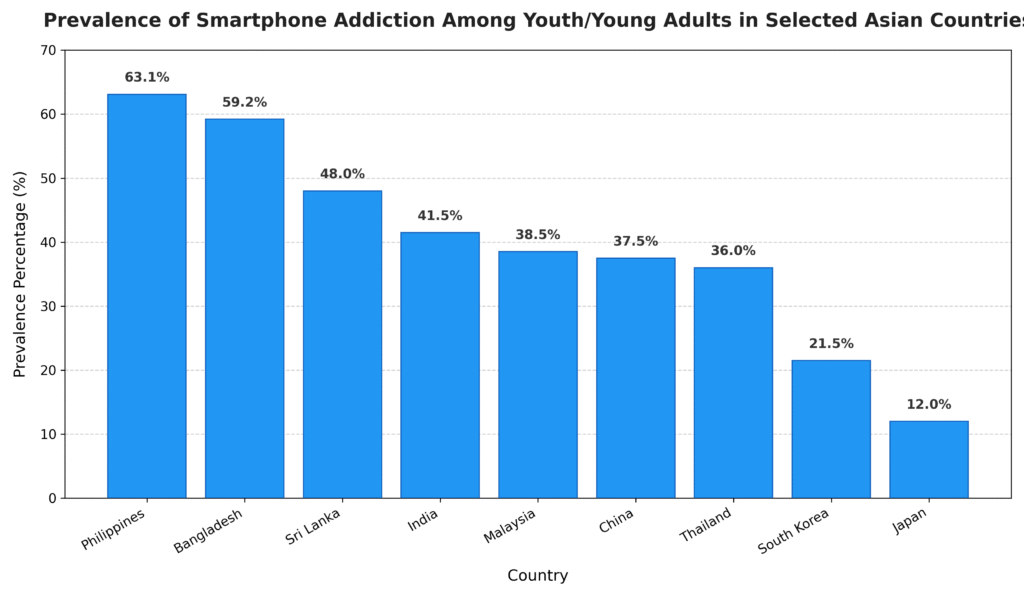
Why Asia? Life here can be intense school pressure, exams, and staying connected with big friend groups or family. Phones become an escape, but that escape can turn into a habit that’s hard to break. Globally, young people check their phones hundreds of times a day, but in many Asian countries, daily screen time often goes over 4-5 hours.
The World Health Organization has flagged smartphone overuse as a growing mental health concern in many countries, including in Asia. It’s not just “being lazy” it’s linked to real changes in how our brains work.
That Late-Night Scroll? It’s Keeping Your Brain Awake
You might have heard about “blue light” from screens the bright glow that tricks your brain into thinking it’s daytime. But the real problem is bigger than just light. When you scroll right before bed (or even in bed), your brain stays in “alert mode.”
Here’s why:
- The exciting content (funny videos, chats, games) pumps up your excitement and stress hormones.
- Notifications ping you awake.
- Even without blue light, the stimulation delays your body’s natural wind-down.
Studies show:
- Using your phone in the hour before bed can make it harder to fall asleep, reduce deep sleep, and leave you groggy the next day.
- One big review found that bedtime phone use leads to poorer sleep quality overall.
- In young people, this is worse because our brains are still developing and more sensitive.
The key stat everyone mentions: Try stopping phone use at least 1-2 hours before bed. Research says this gives your brain time to relax and produce melatonin (the sleep hormone) properly. Without it, your brain doesn’t fully “shut off”, it’s like leaving a party light on when you’re trying to sleep. Your body might rest, but your mind stays buzzing.
In Asian studies, kids with high phone use before bed report more insomnia, tiredness, and even headaches or neck pain from poor posture.
How This Affects Your Mental and Physical Health
Over time, bad sleep from phones adds up. It’s linked to:
- Feeling more anxious or depressed studies in China and other Asian countries show longer screen time means higher anxiety and depression scores.
- Lower focus in school or work.
- Less energy for sports or hanging out in real life.
- Physical stuff like eye strain, bad posture, or even less exercise (since you’re sitting and scrolling).
But it’s not all doom! Many young people feel better when they cut back a bit more energy, better moods, and sharper minds.
The Good Side: Phones Can Be Your Best Friend (If Used Right)
Phones aren’t the enemy. Think about all the awesome stuff:
- Learning new languages or skills on apps like Duolingo or YouTube.
- Staying connected with friends and family far away.
- Finding communities for hobbies, mental health support, or career tips.
- Educational videos, podcasts, or news that make you smarter.
The trick is balance. We humans invented this tech to help us, not hurt us. So, how do we use it wisely?
Simple Tips to Take Control (Without Feeling Deprived)
You don’t have to quit cold turkey. Start small, these are easy changes that make a big difference:
- The 2-Hour Rule: Stop screens at least 2 hours before bed. Read a book, listen to music (offline), or chat with family instead. Your sleep will thank you!
- Night Mode Magic: Turn on blue light filters (most phones have them) in the evening. Or use apps that dim screens automatically.
- Charge Outside Your Room: Keep your phone charging in another room at night. No temptations, no pings waking you up.
- Set Limits: Use built-in tools like screen time trackers. Aim for “quality time” maybe 30 minutes of fun scrolling, then switch to something else.
- Replace the Habit: Feeling bored? Try a quick walk, drawing, journaling, or calling a friend (voice only!). Physical activity is a huge win studies show it reduces phone cravings.
- Mindful Scrolling: Ask yourself: “Am I enjoying this, or just zoning out?” Follow accounts that inspire you fitness, art, motivation instead of endless drama.
- Talk About It: Share with friends or family. Make it a group challenge who can have the best “digital detox” day?
Parents and schools in places like China and South Korea are already helping with rules and programs. You can lead the way in your circle.
Wrapping It Up: You’re in Charge
Smartphones are part of our world now, and that’s okay. But when they start running your sleep, mood, or days, it’s time to flip the script. The stats from Asia show we’re all in this together high use, high risks but also high potential to change.
You’re smart, capable, and deserve to feel great: well-rested, focused, and happy. Small tweaks can give you the best of tech without the downsides. Start tonight, put the phone down a bit earlier, and see how amazing tomorrow feels.
What do you think? What’s one change you’ll try? Your brain (and future self) will high-five you for it! 😊
| Read the related article here – Part 1: Magic Talk of November – “I Feel Behind.. How Do I Catch Up?” |