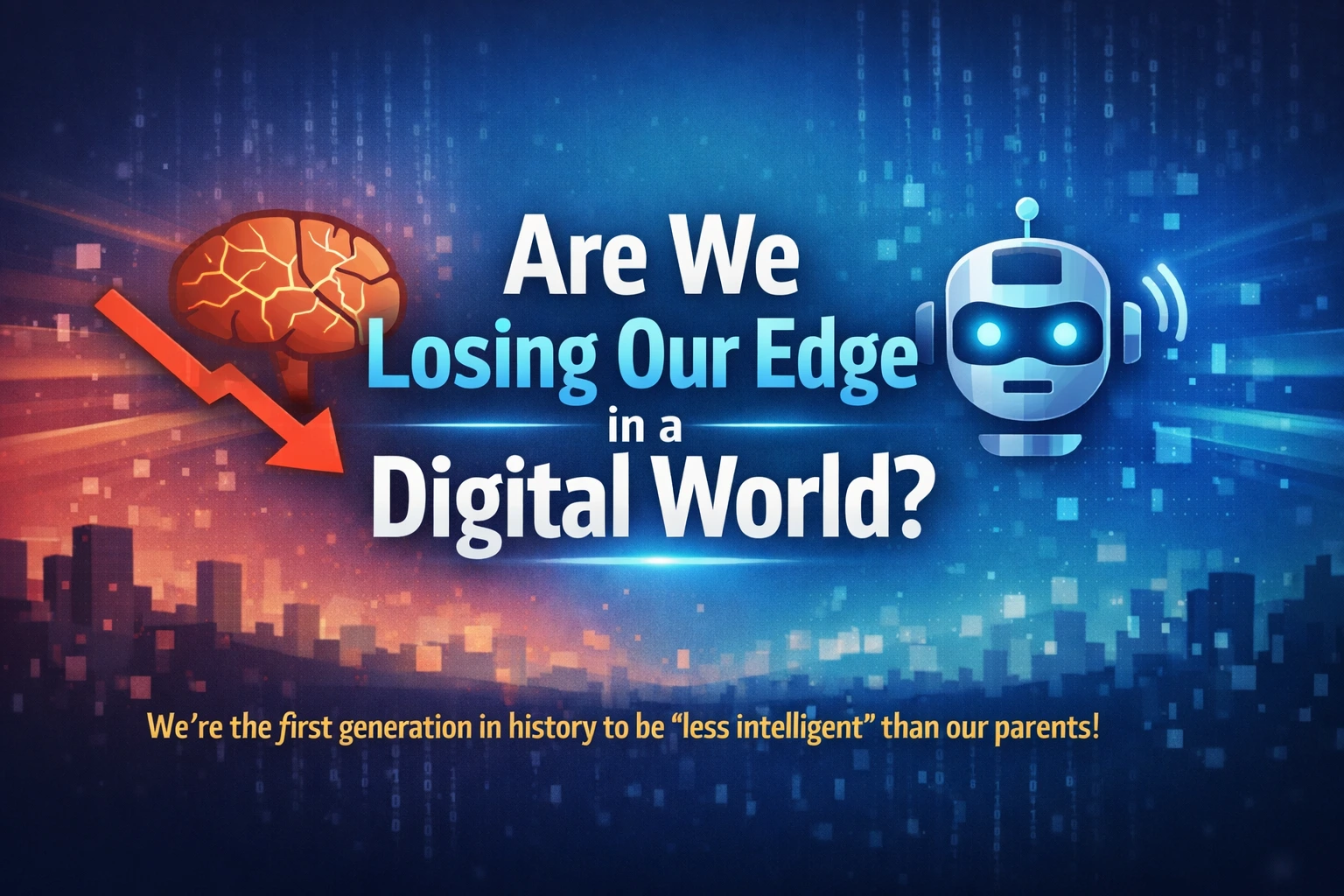
Dear Gen Z, let’s talk about something that’s blowing up online right now. The claim that we’re the first generation in history to be “less intelligent” than our parents. A neuroscientist recently dropped this bombshell in front of the U.S. Senate, saying our brains are getting stunted by endless scrolling, short videos, and screen overload. It’s not just a random opinion; it’s tied to data showing declines in problem-solving, focus, memory, and even math skills. For the first time in over 200 years of recorded progress, younger folks might be slipping backward cognitively.
But here’s the thing: This isn’t doom and gloom. It’s a massive challenge staring us right in the face. In a world built on innovation, creativity, and quick thinking, falling behind isn’t an option. We’re the generation that’s supposed to fix climate change, revolutionize AI, and build the future. If tech is dulling our sharpest tool our minds, then it’s time to fight back. This isn’t about blaming ourselves; it’s about recognizing the trap we’ve fallen into and breaking free. The real question is: Will we rise to the challenge and reclaim our mental superpower?
Read the Part 1: “I Feel Behind.. How Do I Catch Up?”
Read the Part 2: “Why I’m Scared to Fail? And Still Trying”
Read the Part 3: “The Pressure to Be Perfect And Why It’s Breaking Us”
The Hidden Cost of Endless Screens – Why Our Brains Are Under Siege
Growing up with smartphones in our hands and infinite tabs open feels normal, it’s our reality. But experts like Dr. Jared Cooney Horvath point out that we’re spending over half our waking hours staring at screens. That’s not how human brains evolved. We’re wired for deep conversations, hands-on exploration, and focused thinking, not rapid-fire TikToks and AI summaries.
The issue runs deeper than just distraction. Studies linked to the “reverse Flynn effect” where IQ gains from past generations are now reversing in some areas show drops in key skills like verbal reasoning, math, and attention. In schools pushing tablets and apps as “educational tools,” performance often tanks once digital tech takes over. We’re skimming instead of diving deep, multitasking instead of mastering one thing at a time. Short-form content trains us for quick hits of dopamine, but it starves the brain of the sustained effort needed for real intelligence.
Think about it: Our parents’ generation grew up reading books, debating face-to-face, and solving problems without Google at their fingertips. They built stronger neural pathways for memory and critical thinking. We, on the other hand, outsource our brains to algorithms. Notifications fragment our focus, social media fuels comparison anxiety, and endless entertainment makes boredom the birthplace of creativity feel unbearable.
This isn’t saying we’re dumb. Far from it. Gen Z is innovative, empathetic, and tech-savvy in ways older generations can’t touch. We’ve mastered multitasking in a chaotic world, spotted mental health issues early, and driven massive social change. But the challenge is clear: If we keep letting screens dictate how we think and learn, we risk losing the depth that turns good ideas into groundbreaking ones. The digital age is a double-edged sword it connects us but can isolate our minds from true growth.
Reclaiming Your Mental Power – Practical Steps to Level Up Your Brain
The good news? This challenge is winnable. Intelligence isn’t fixed; it’s malleable. Neuroplasticity means your brain can rewire itself with the right habits. We’re not doomed, we’re at a crossroads. By making intentional choices, you can boost focus, sharpen memory, and build the kind of deep intelligence that no app can replicate. Here’s how to turn the tide:
First, embrace digital minimalism. Start with a screen audit: Track your daily usage and cut the low-value stuff. Set strict boundaries, no phones in bed, designated “deep work” hours without notifications. Try dopamine detox days: Go analog with books, journals, or walks in nature. Research shows even short breaks from screens improve attention and reduce anxiety.
Second, prioritize deep learning over shallow scrolling. Read physical books or long-form articles that challenge you. Dive into complex topics like philosophy, coding, or science without shortcuts. Join debate clubs, study groups, or online communities focused on real discussion, not memes. Practice active recall quiz yourself instead of re-reading notes to strengthen memory pathways.
Third, move your body and connect in real life. Exercise isn’t just for fitness; it pumps blood to the brain, sparking new neuron growth. Aim for outdoor activities, sports, or even dancing to combat sedentary screen time. Build face-to-face relationships: Hang out without phones, have unfiltered conversations. Humans learn best from each other, not algorithms.
Finally, question the system. Push back against “edtech” overload in schools if it feels ineffective. Advocate for balanced education that mixes tech with traditional methods. Experiment with tools mindfully use AI for assistance, not replacement. The goal isn’t to ditch technology; it’s to master it so it serves your growth, not the other way around.
Gen Z has the tools and awareness to lead this shift. We’re digital natives who understand the game’s flaws better than anyone. By choosing depth over distraction, we can reverse this trend personally and culturally.
The Future Is Yours – Turn the Challenge Into Your Superpower
This “intelligence decline” narrative isn’t the end of our story, it’s the beginning of a revolution. Imagine a Gen Z that combines unmatched tech fluency with razor-sharp focus, creativity, and resilience. We’d be unstoppable: Innovating solutions to global problems, creating art that moves the world, and building societies that prioritize real human connection.
The challenge ahead is real, but so is our potential. Don’t let headlines define you. Prove the skeptics wrong by investing in your mind today. Start small one book, one focused hour, one real conversation at a time. The world needs your full brilliance, not a dimmed version dulled by screens.
Gen Z, this is our moment. Rise up, reclaim your edge, and show everyone what true intelligence looks like in the digital age.
Read the previous series in this blog: Learn & Improve