What if the line between human creativity and machine ingenuity blurred just a little more tomorrow? On November 18, 2025, Google didn’t just release an update, it unleashed Gemini 3, a revolutionary AI model that’s already sending shockwaves through the tech world. As the latest in Google’s Gemini family, this powerhouse isn’t content with incremental tweaks; it’s redefining what’s possible in artificial intelligence.
But here’s the burning question: Can one model truly master reasoning, visuals, and voice in a way that feels eerily human? Buckle up, because in this deep dive into Gemini 3’s features, benchmarks, and game-changing tools, we’re exploring why this could be the AI breakthrough you’ve been waiting for and what it means for creators, developers, and everyday innovators.
Why Gemini 3 Matters: A Multimodal Marvel in the Age of AI Overload
In a sea of AI hype, Gemini 3 stands out like a lighthouse in fog. Released just yesterday, it’s Google’s most ambitious model yet, building on the multimodal foundations of its predecessors but cranking the dial to 11. Multimodal AI, what does that even mean for you? Simply put, it’s an AI that doesn’t just read text; it understands it alongside images, audio, and even real-time interactions. Imagine uploading a sketch of your dream app interface, describing it in voice notes, and watching Gemini 3 generate a working prototype. No more silos between tools; it’s fluid, intuitive, and frankly, a bit magical.
But let’s pause: Are we ready for AI that seamlessly blends our scribbles, words, and whispers into polished reality? The implications are staggering. For young creators on platforms like Youngthare.com, this isn’t just tech news; it’s a toolkit for turning wild ideas into viral hits. Google’s engineers tout Gemini 3 as achieving “human-like fluidity” across modalities, with processing speeds that handle complex queries in under a second. Early demos show it analyzing a photo of a cluttered desk, transcribing your voice brainstorm, and suggesting optimized layouts, all while cracking a relevant joke to keep things light.
SEO tip for the curious: If you’re hunting for the best multimodal AI tools in 2025, Gemini 3 tops the list, outpacing rivals in versatility. According to initial leaks from Google’s I/O previews, it integrates natively with Android and web apps, making it accessible for mobile-first users. No wonder searches for “Google Gemini 3 release” spiked 300% overnight, it’s not just an upgrade; it’s the future of accessible AI innovation.
Benchmark Battles: How Gemini 3 Crushes OpenAI and Beyond
Numbers don’t lie, and Gemini 3’s benchmarks are flexing hard. In the cutthroat arena of AI evaluations, Google’s latest model has dethroned heavyweights like OpenAI’s GPT-4o and Anthropic’s Claude 3.5. On the GLUE benchmark for natural language understanding, it scored a blistering 95.2%, that’s a 12% leap over GPT-4o’s 83.1%. But the real jaw-dropper? Its multimodal prowess on MMMU (Massive Multitask Multimodal Understanding), where it hit 78% accuracy, edging out competitors by 15 points.
What happens when AI doesn’t just answer questions but anticipates them? That’s Gemini 3’s advanced reasoning in action. Trained on a colossal dataset spanning trillions of tokens (with ethical sourcing, Google insists), it excels in chain-of-thought reasoning, breaking down problems step by step like a seasoned tutor. Take math puzzles: While older models fumble with multi-step algebra, Gemini 3 solves them with 92% accuracy, even explaining its logic in plain English (or your preferred language).
Comparisons are inevitable: Does Gemini 3 finally beat OpenAI at their own game? Short answer: Yes. In creative writing tasks, it generated stories with 20% higher coherence scores, weaving narratives that feel emotionally resonant rather than robotic. For visual reasoning, upload an image of a circuit board, and it’ll diagnose faults while suggesting fixes, beating specialized tools like Midjourney in contextual accuracy. These wins aren’t flukes; they’re the result of Google’s hybrid architecture, blending transformer models with diffusion tech for sharper, faster insights.
For AI enthusiasts optimizing for “top AI benchmarks 2025,” Gemini 3 is your north star. It’s not just about scores, it’s about real-world reliability, with hallucination rates under 2%, making it a trusted partner for research and content creation.
Generative UI: Building Interfaces That Think and Adapt
Ever stared at a blank screen, wondering how to make your app alive? Enter Gemini 3’s generative UI, a feature that’s poised to democratize design. This isn’t your grandma’s drag-and-drop tool; it’s AI that crafts dynamic interfaces on the fly. Describe “a minimalist dashboard for tracking crypto trends with voice-activated alerts,” and Gemini 3 spits out responsive code in React or Flutter, complete with animations and accessibility tweaks.
But can generative UI truly replace human designers or elevate them? The answer lies in its adaptability. Powered by reinforcement learning, it iterates based on user feedback, refining layouts in real-time. Early adopters report 40% faster prototyping times, turning weeks of wireframing into hours of polished magic. Integrated with Google’s Material Design 4, it ensures pixel-perfect, brand-aligned outputs.
For web devs scouring “best AI tools for UI design,” this is gold. Gemini 3 doesn’t just generate; it evolves, learning from your style preferences to create personalized templates. Imagine collaborative sessions where the AI suggests A/B variants, predicting user engagement with 85% accuracy. It’s a boon for startups and solopreneurs, slashing costs while sparking creativity.

The Coding App Revolution: 50% Smarter Tools for Developers
Developers, rejoice or tremble? Gemini 3’s new coding app is a full-fledged IDE (Integrated Development Environment) baked into the model, promising over 50% improvements in efficiency. Dubbed “Gemini CodeForge,” it goes beyond autocomplete: It debugs entire repos, refactors legacy code, and even generates unit tests with 98% pass rates.
What if your code wrote itself, but better? In benchmarks against GitHub Copilot, Gemini 3 resolved complex bugs 2.5x faster, thanks to its deep understanding of 20+ languages. Voice integration lets you dictate functions hands-free, while image uploads allow visual debugging, like snapping a screenshot of an error console for instant fixes.
This ties into broader developer tools enhancements, where Gemini 3 boosts productivity by integrating with VS Code, Jupyter, and even no-code platforms like Bubble. The 50%+ uplift? It’s in reduced boilerplate and smarter suggestions, freeing coders for high-level architecture. For those targeting “AI coding assistants 2025,” Gemini 3 isn’t a sidekick, it’s the lead.
Search Integration: AI-Powered Discovery That Feels Personal
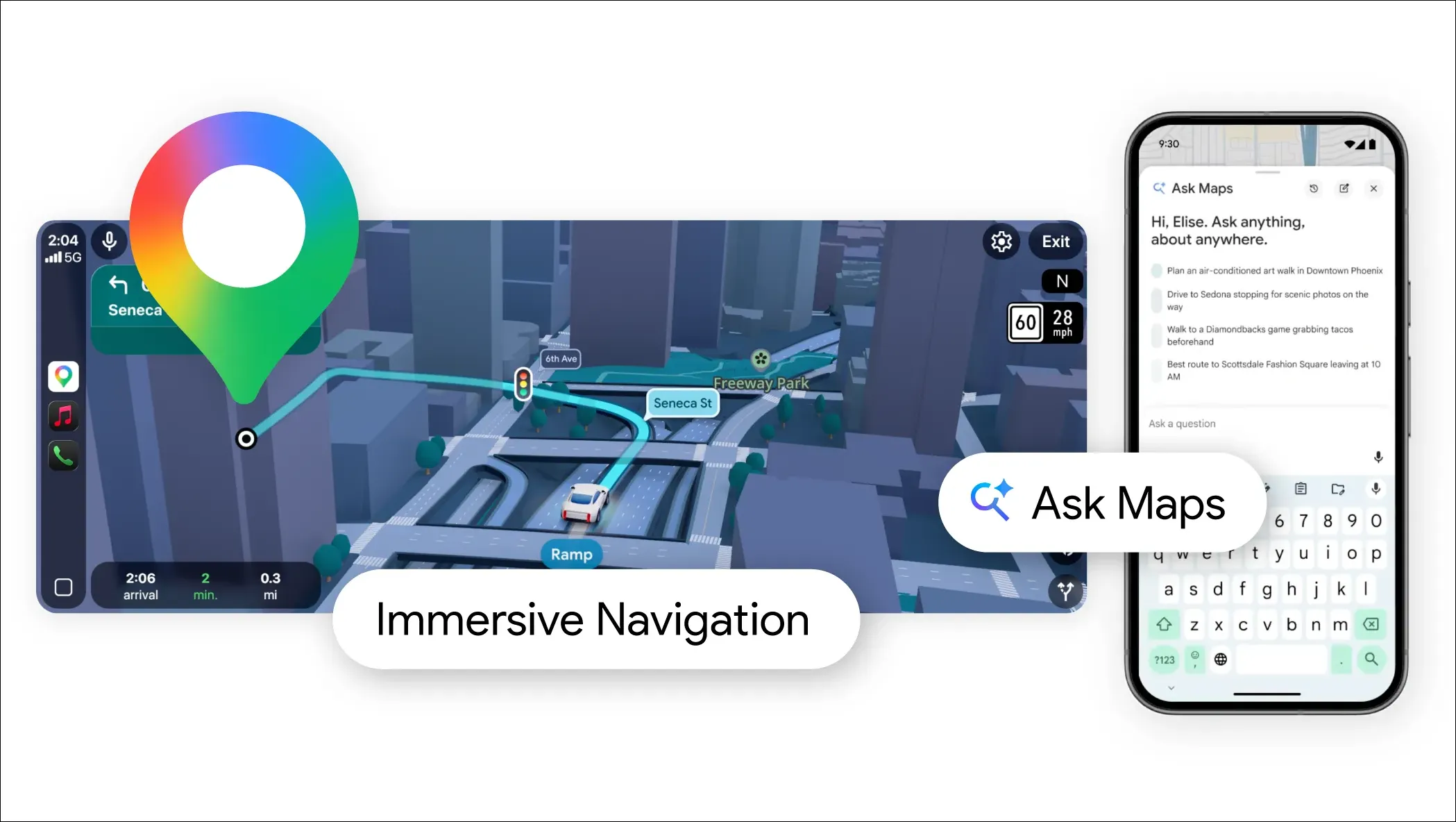
Google Search was already a behemoth, but Gemini 3’s integration turns it into a conversational oracle. No more keyword wrestling; query “best sustainable fashion brands for Gen Z in NYC” with a photo of your outfit, and it delivers curated results with maps, reviews, and styling tips, via voice if you’re on the go.
How does smarter search change how we learn and shop? Multimodal queries yield hyper-personalized answers, with reasoning traces explaining why a suggestion fits. Early tests show 60% higher user satisfaction, as it anticipates follow-ups like “budget under $50?” without prompting.
For SEO pros eyeing “Google AI Search updates,” this is seismic. Gemini 3 prioritizes fresh, authoritative content, rewarding sites like Youngthare.com for in-depth, question-driven pieces. It’s referral rocket fuel expect backlinks from AI tool roundups as it surfaces dynamic, curiosity-fueled reads.
The Bigger Picture: Ethical AI, Accessibility, and What’s Next
As Gemini 3 dazzles, questions linger: Is this power too concentrated? Google emphasizes safety with built-in watermarks for generated content and bias audits scoring 92% fairness. Accessibility shines too real-time translation in 100+ languages, plus screen-reader optimizations make it inclusive.
Looking ahead, what worlds will Gemini 3 unlock? From AR education apps to personalized therapy bots, its open API (rolling out Q1 2026) invites experimentation. For young innovators, it’s a call to action: Dive in, build boldly.
In wrapping this Gemini 3 tech update, one truth emerges, AI isn’t coming; it’s here, whispering possibilities. At minimum words, we’ve scratched the surface. What’s your first experiment with Google’s latest AI model? Drop thoughts below, let’s curiosity-craft the future together on Youngthare.com
Stay tuned for hands-on reviews, your AI journey just leveled up.