(Editor’s Note: Grab a handkerchief. We are at Stop of the Youngthare “Nostalgia Winter Series“. We’ve survived the ice of Narnia and Ice Age, but now we are entering the warmth of the March family living room. It’s Christmas time in Concord.)
If you grew up with a “literary soul,” there is a specific scene that lives rent-free in your head. It is the image of four sisters huddled around a fireplace, knitting, bickering, and dreaming, while the snow piles up against the windowpane.
For Gen Z, Little Women isn’t just a book or a movie; it is a ritual.
Most of us were introduced to the story through the 1994 Gillian Armstrong film (starring Winona Ryder and a very young Christian Bale) which played on repeat during cable TV Christmas marathons. But as we grew up, the story grew with us, evolving into Greta Gerwig’s 2019 masterpiece.
Together, these films form the ultimate winter mood board. They taught us about ambition, heartbreak, and the specific comfort of “home” before we were old enough to leave it.
Here is why revisiting the March sisters this week is essential for your soul.
Also in Explained | The Bell Still Rings: Why ‘The Polar Express’ is the Tech-Noir Lullaby of Our Generation
The Origin of “Cottagecore”
Before TikTok invented the term “Cottagecore,” Little Women was the blueprint.
Visually, these films offer a sensory experience that modern, sleek sci-fi movies can’t replicate.
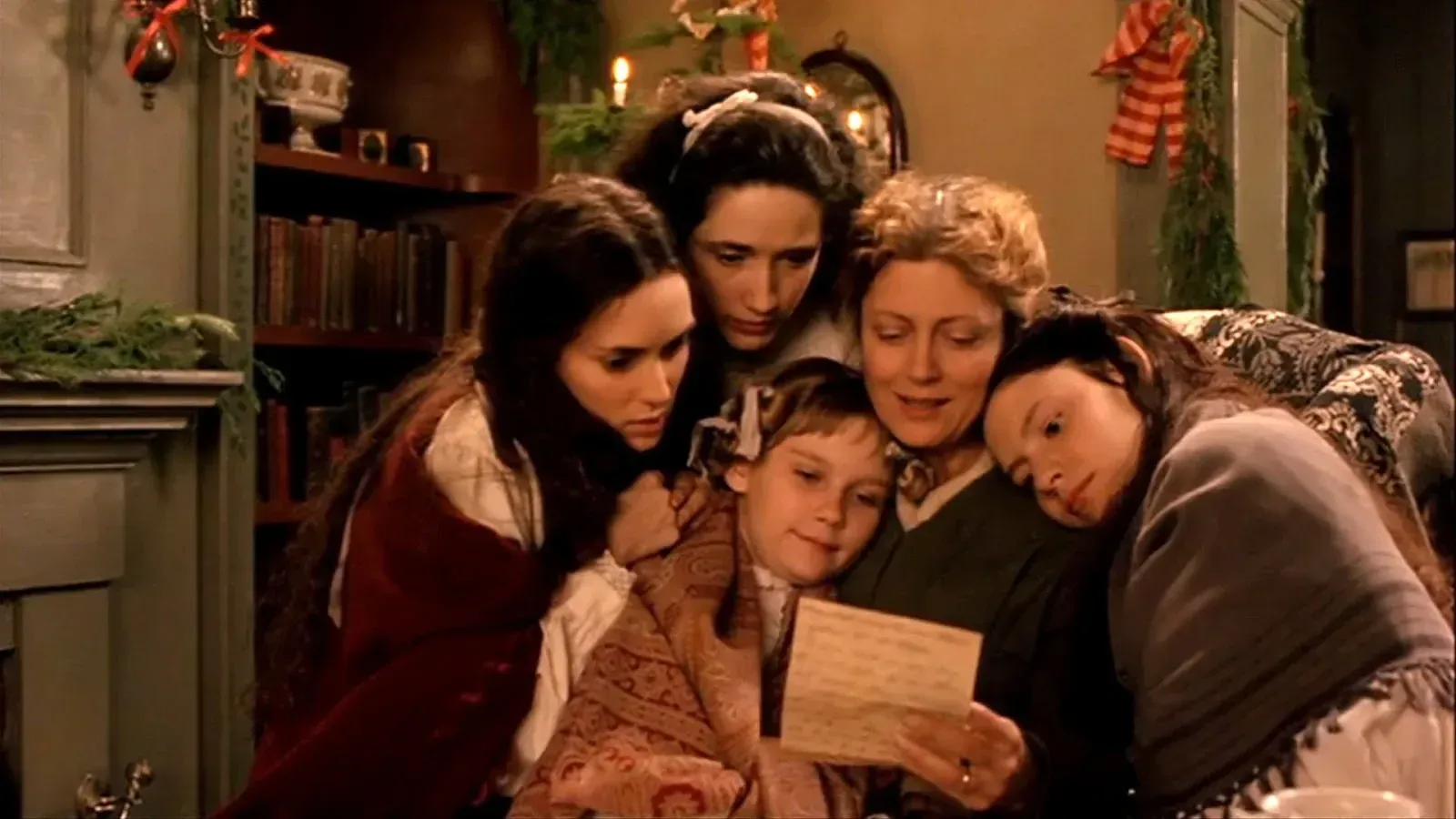
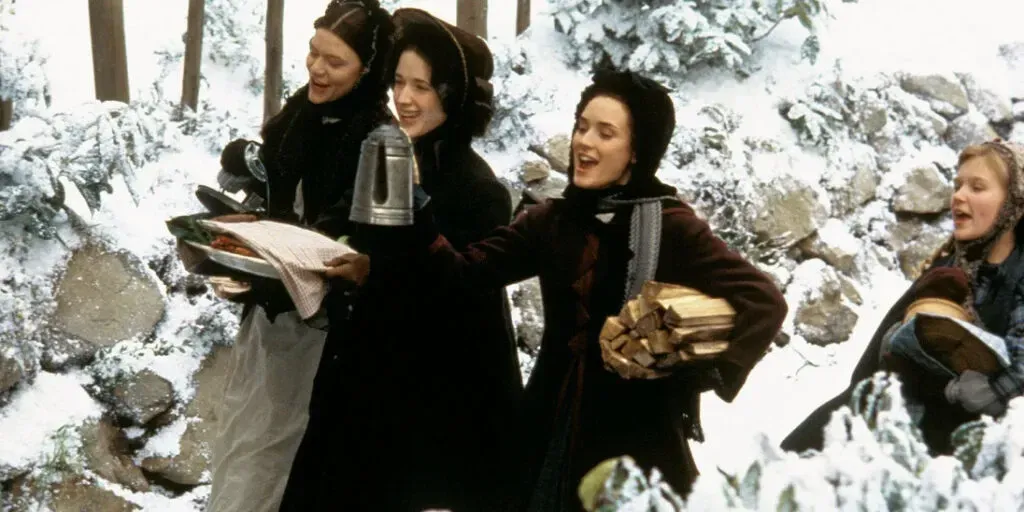
- In the 1994 version: It’s about the knits. The rich burgundies, the heavy wool shawls, the candlelight reflecting off dark wood. It feels like a warm hug.
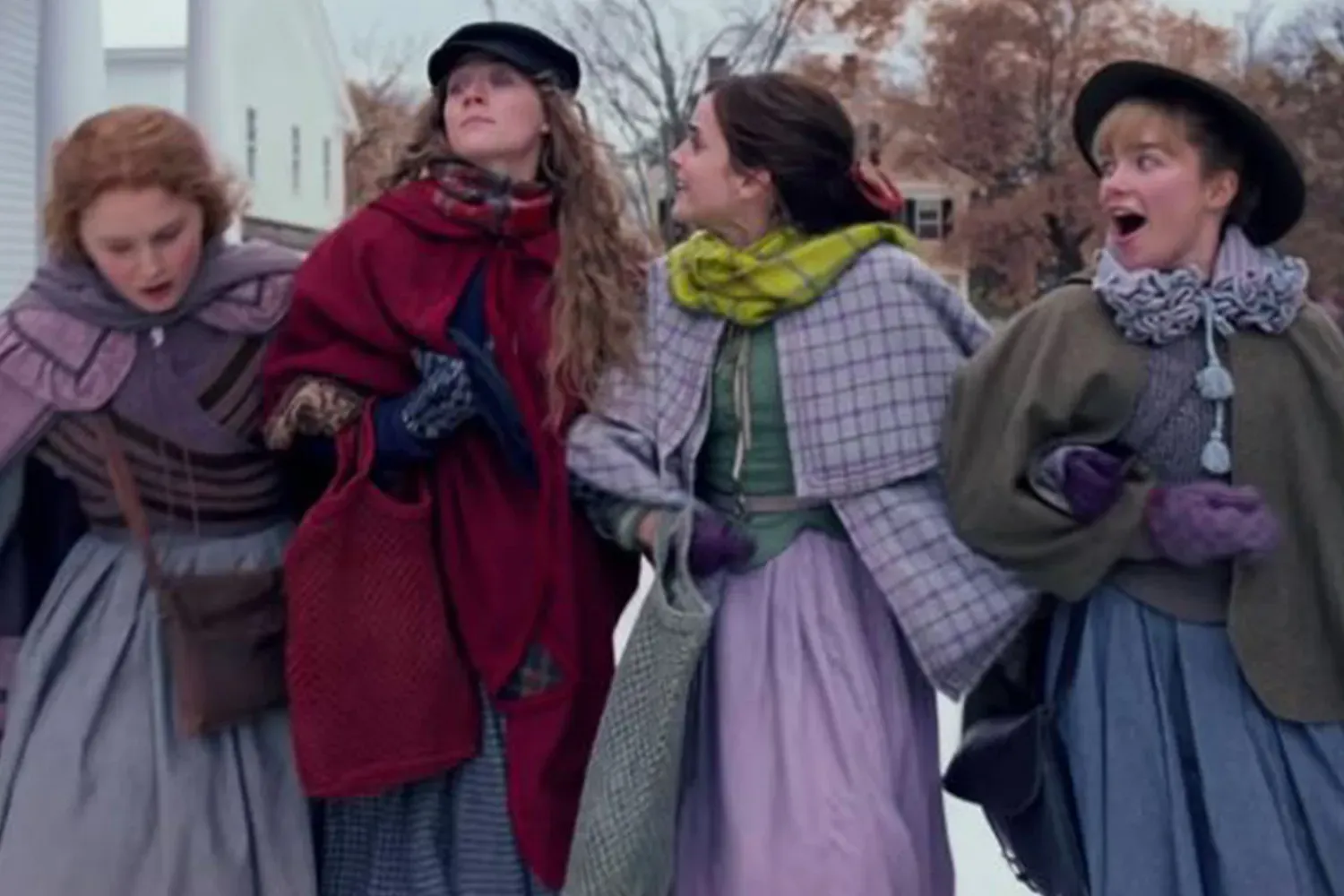
- In the 2019 version: It’s about the energy. Director Greta Gerwig famously told her cast to talk over each other, creating a chaotic, loud, realistic soundscape of a big family.
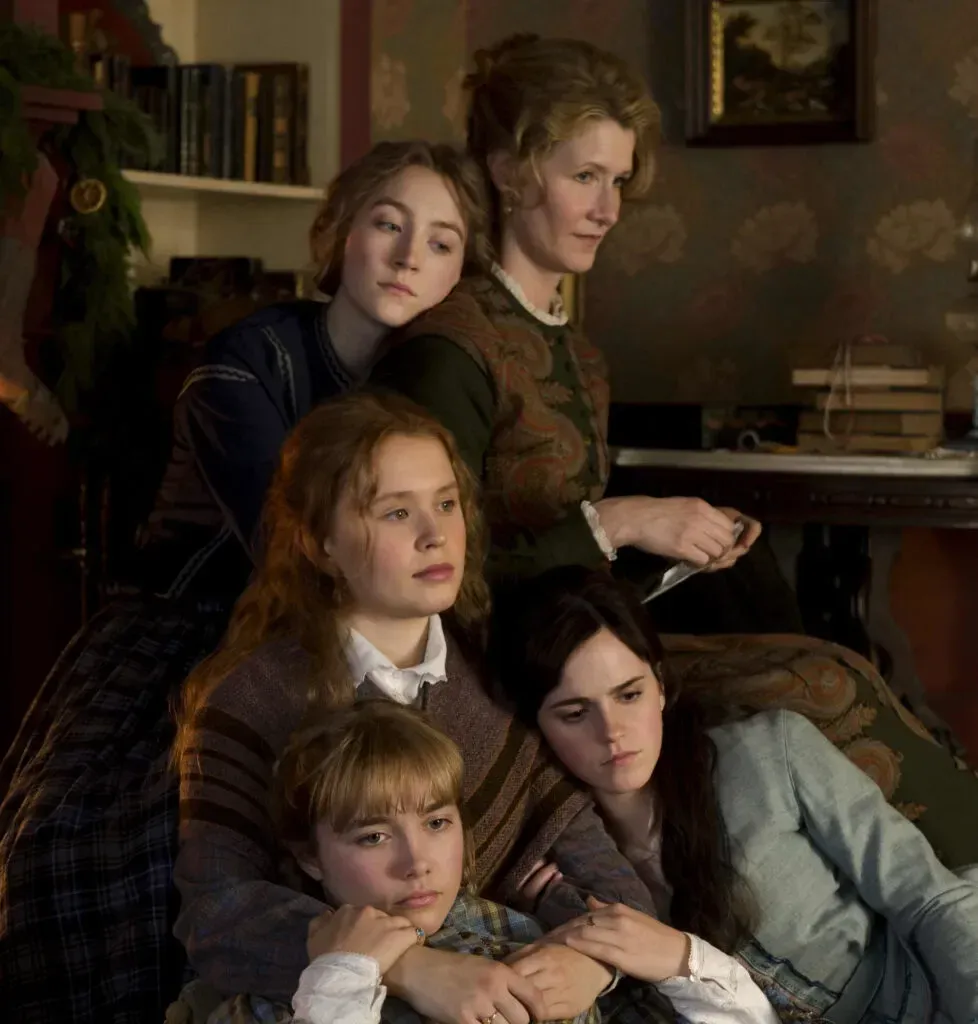
From a design perspective, the 2019 color grading is a stroke of genius worth noting. The film splits the timeline: the childhood scenes are bathed in a warm, golden glow (nostalgia), while the adult scenes are shot in cool, sharp blues (reality). It subconsciously teaches us that childhood memories always feel “warmer” than the present, a feeling every Gen Z adult knows too well.
The “Laurie” Phenomenon: Christian Bale vs. Timothée Chalamet
It is the debate that divides the internet. Who was the ultimate “Boy Next Door”?
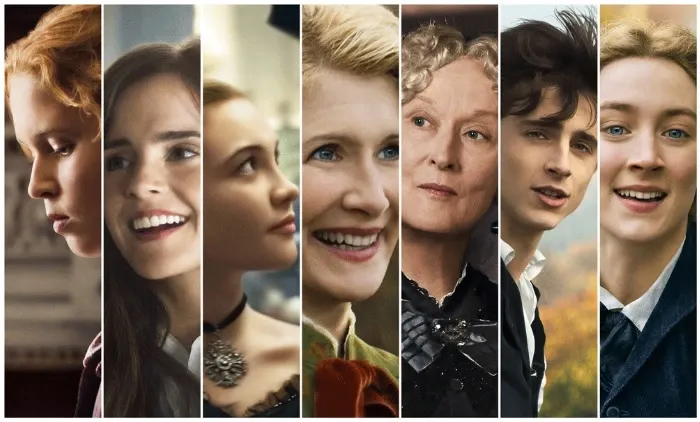
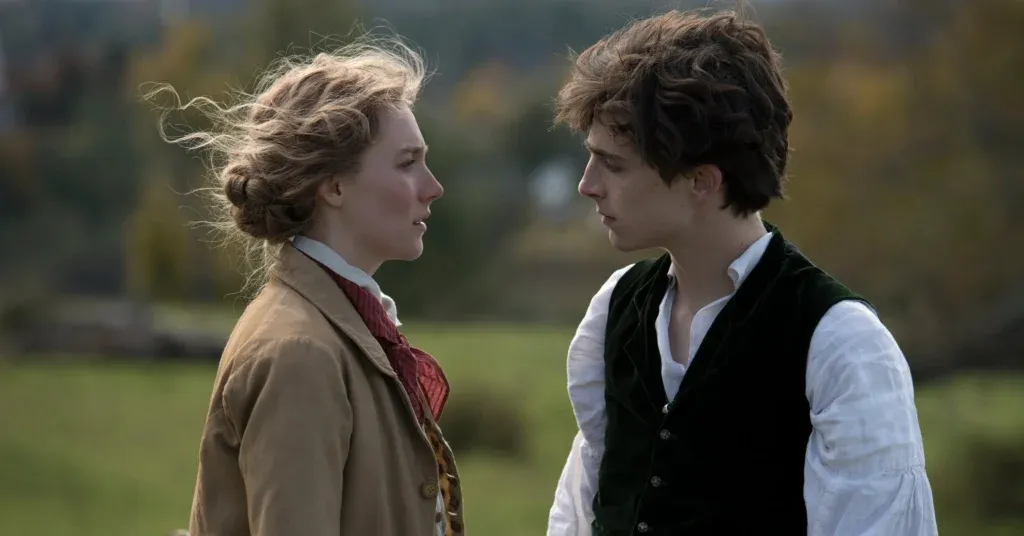
For the “Old Soul” Gen Z born around 2000, we occupy a unique middle ground. We likely had a childhood crush on Christian Bale’s Laurie (1994) charming, steady, and tragically friend-zoned. But as young adults, we witnessed Timothée Chalamet (2019) turn Laurie into a Gen Z icon; a slightly more chaotic, artistic soul who matched Jo’s energy perfectly.
Regardless of which version you prefer, the character of Laurie represents a universal longing: the desire for a friend who sees you completely, even if you can’t be with them. The proposal scene on the hill (or at the woods) (“I have loved you since the moment I saw you…“) remains one of the most painful, perfect scenes in cinema history.

Jo March: The Original “Burnout” Icon
As kids, we wanted to be Jo March because she was cool. She wrote stories! She cut her hair! She ran wild!
Rewatching it in our 20s, we relate to Jo for a different reason: She is tired.
Jo represents the modern struggle between ambition and loneliness. She wants to be great (“I want to do something splendid… something that won’t be forgotten“), but she also admits to Marmee in a heartbreaking scene: “I’m so sick of people saying that love is just all a woman is fit for… but I’m so lonely.”
That line resonates deeply with a generation that is prioritizing career and education but simultaneously facing a “loneliness epidemic.” Jo March validates the feeling that you can be independent and strong, but still crave connection.
The Amy March Redemption Tour
Growing up, it was practically a law that you had to hate Amy. She burned the manuscript! She was selfish! She married Laurie!
But the 2019 film did the impossible: It made us respect Amy.
Florence Pugh’s performance gave Amy a voice. She explains the economic reality of her time—that marriage is an economic proposition. She isn’t a villain; she is a pragmatist. While Jo is the dreamer, Amy is the realist who ensures the family survives.
For Gen Z, realizing that “Amy was actually right” is a rite of passage. It marks the moment we stop seeing the world in black-and-white and start understanding the complexity of adulthood.
The Youngthare Verdict: Come Home for Christmas
Why does the music (whether it’s Thomas Newman’s 1994 score or Alexandre Desplat’s 2019 score) make us cry?
Because Little Women is about the passage of time. It’s about realizing that the “castle in the air” you built as a child might not come true, but the life you build instead can still be beautiful.
It reminds us that no matter how far we drift into careers, new cities, or digital distractionsthe distinct warmth of a Christmas fire and the forgiveness of a sister (or a chosen family member) is what truly matters.
So, this December, prepare your tea. Wrap yourself in your heaviest blanket. And let yourself cry over Beth one more time. It’s tradition.
Also in Explained | The Chronicles of Narnia: Why We Are Still Searching for the Back of the Wardrobe