
(Editor’s Note: This is the second installment in our “Nostalgia Winter Films” series. If you missed our first stop on the nostalgia express, check out our deep dive into the tech-noir masterpiece, The Polar Express – 2004, [Link] here.)
There is a specific sensation that every person born around the turn of the millennium remembers. It isn’t a sound or a sight, but a tactile feeling: the imaginary scratch of heavy fur coats against your face, followed immediately by the shock of freezing cold air. The Narnia books, known as The Chronicles of Narnia, were written by the celebrated author C. S. Lewis (Clive Staples Lewis), who published the seven-book fantasy series between 1950 and 1956, enchanting readers with tales of children discovering the magical world of Narnia.
If The Polar Express (2004) was about the hope of Christmas, The Chronicles of Narnia: The Lion, the Witch and the Wardrobe (2005) was about something arguably more important to us growing up: Escapism.

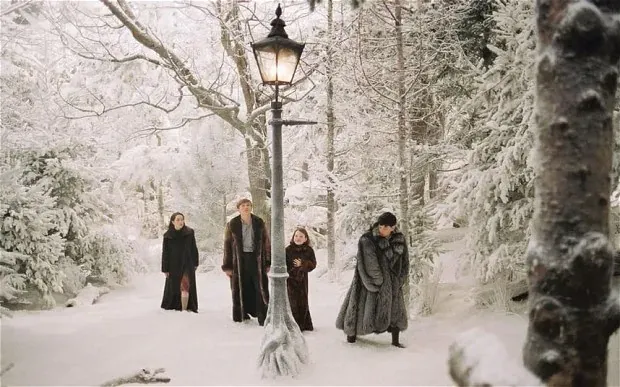

Released in December 2005, when many of us were navigating the confusing transition from kindergarten to primary school (or primary to middle), this film didn’t just tell a story, it handed us a key. It legitimized the idea that the real world could be boring, scary, or unfair, and that it was perfectly reasonable to look for a door to somewhere else.
Looking back at this film through the lens of 2024 nearly two decades later, it stands as a miraculous intersection of old-school practical filmmaking and the dawn of modern CGI. It captures a “Deep Winter” aesthetic that hits the Gen Z soul differently than modern streaming content.
Here is an extensive look at why Narnia remains the undisputed king of winter fantasy, and why we still find ourselves checking the back of the closet.
Also in Explained | House of David 2025: The Biblical Epic That’s Breaking Streaming Records
The Psychology of the Wardrobe: The Original “Liminal Space”
Gen Z has a fascination with “liminal spaces” transitional locations that feel eerie, nostalgic, and suspended in time. Before we had the “Backrooms” memes on TikTok, we had the Wardrobe.
The brilliance of Director Andrew Adamson’s adaptation lies in how he handled the transition. The film begins in the stark, sepia-toned reality of World War II London. We see the Pevensie children huddled in a shelter during the Blitz, surrounded by the terrifying noise of bombers. This grounded the movie in a very real, very traumatic history.

When Lucy Pevensie steps into the wardrobe, she isn’t just entering a magic land; she is entering a sanctuary. The genius of the sound design in this sequence cannot be overstated. As she pushes through the coats, the sound of the rain against the windowpane doesn’t cut off abruptly; it fades. It is replaced by the crunch of snow and a profound, ringing silence.
For a generation that is currently burnt out by the constant notification pings of the digital age, that silence is the ultimate luxury. The “Spare Oom” (Spare Room) represents the threshold between the responsibilities of the real world and the infinite potential of the imagination. It validates the introvert’s desire to simply… disappear for a while.
The Tech Behind the Magic: Why Narnia Feels “Heavier” Than Marvel
In an era where blockbuster movies often feel weightless due to an over-reliance on green screens (the “floaty” CGI effect), The Lion, the Witch and the Wardrobe feels incredibly grounded. When a character hits the ground, you feel the impact.
Why? Because unlike modern productions that digitize everything, Narnia relied on the “Hybrid Filmmaking” philosophy. For the tech and design enthusiasts reading Youngthare, here is the breakdown of why this film is a technical marvel.
1. The Real Steel of Weta Workshop
You cannot talk about early 2000s fantasy without bowing down to Weta Workshop, the New Zealand-based prop and effect house that also built The Lord of the Rings.
For Narnia, Weta didn’t just 3D print plastic toys. They treated the production like a historical reenactment of a war that never happened.
- The Weapons: The swords used by Peter and Edmund were hand-forged steel, not rubber. The actors had to learn to handle the actual weight of the weaponry, which changed their posture and movement on screen. When Peter unsheathes Rhindon, the shimmer and the sound are authentic.
- The Armor: The chainmail was actual chainmail (or high-grade PVC links indistinguishable from metal), handcrafted to look battle-worn.
- The Creatures: While the centaurs were CGI from the waist down, the actors wore prosthetics and armor on their upper bodies. This meant the light reacted naturally to their skin and gear, avoiding that “shiny” fake look common in 2024 superhero movies.

2. The AI Soldiers: “Massive” Software
The final Battle of Beruna is one of the most epic winter skirmishes in cinema history. To animate thousands of Narnians and the White Witch’s dark army, the visual effects team utilized a software program called Massive.
This software was revolutionary. Instead of an animator hand-drawing every soldier, Massive used Artificial Intelligence to give each digital extra a “brain.” The software agents (soldiers) were given rules about how to fight, how to react to an enemy, and when to flee. When you watch the background of the battle scenes, those digital creatures are making their own decisions in real-time simulations. This was cutting-edge educational tech in 2005 that paved the way for the AI revolution we are living through today.
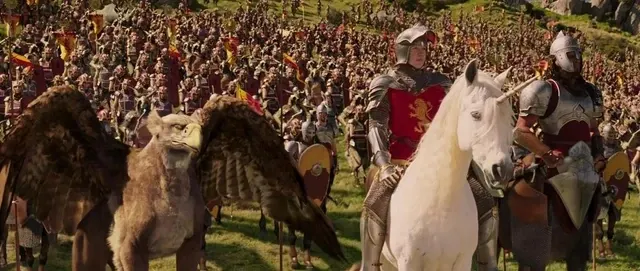
3. Aslan: The Fur Challenge
Creating a talking lion that commands reverence rather than laughter is arguably the hardest VFX challenge of the 2000s. The team at Rhythm & Hues studios had to develop new “fur shaders” to simulate millions of individual hairs. They had to account for how wind, gravity, and light interacted with the fur.
The result was an Aslan who felt heavy, warm, and dangerous. You could see him breathing. This bridged the “Uncanny Valley” gap that The Polar Express struggled with just a year prior.
Aesthetic Analysis: “Always Winter, Never Christmas”
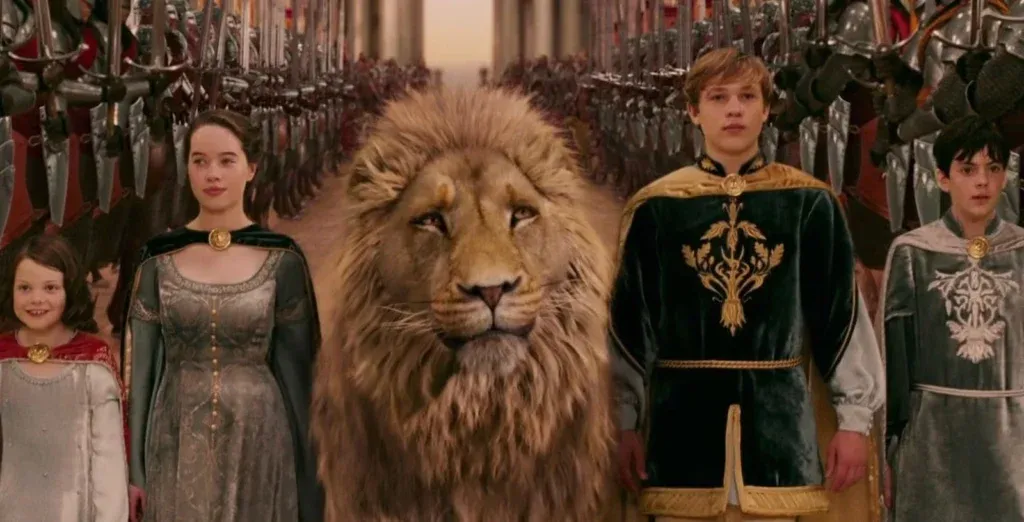
Visually, the film is a masterpiece of color grading. The first half of the Narnia sequence is dominated by the “White Witch Palette”: icy blues, stark whites, and desaturated greys.
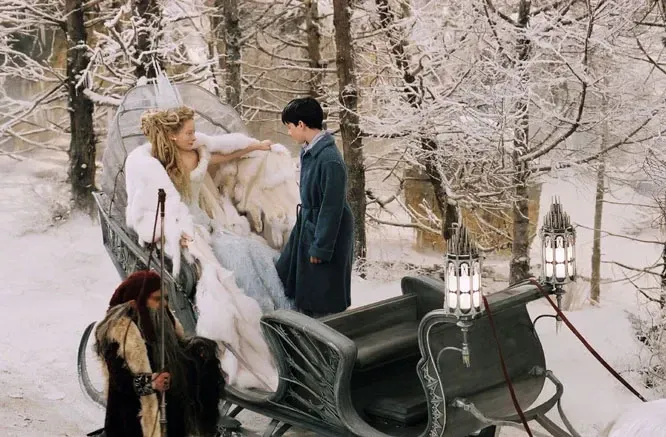
This aesthetic choice resonates deeply with the “Dark Academia” and “Winter Core” trends popular with Gen Z today. It captures the beauty of isolation. The frozen waterfalls, the stone statues in the Witch’s courtyard, and the solitary lamppost in the woods create a mood of melancholic beauty.
But the film teaches us a lesson through color: beauty without warmth is deadly. As Aslan approaches and the “Deep Magic” shifts, the color palette thaws. We see greens, purples, and the rich gold of the coronation scene. It subconsciously teaches the viewer that the “eternal winter” (depression/stagnation) is something to be overcome, not admired.
The Villain Problem: Why Tilda Swinton Terrified Us
We need to talk about Jadis, the White Witch.
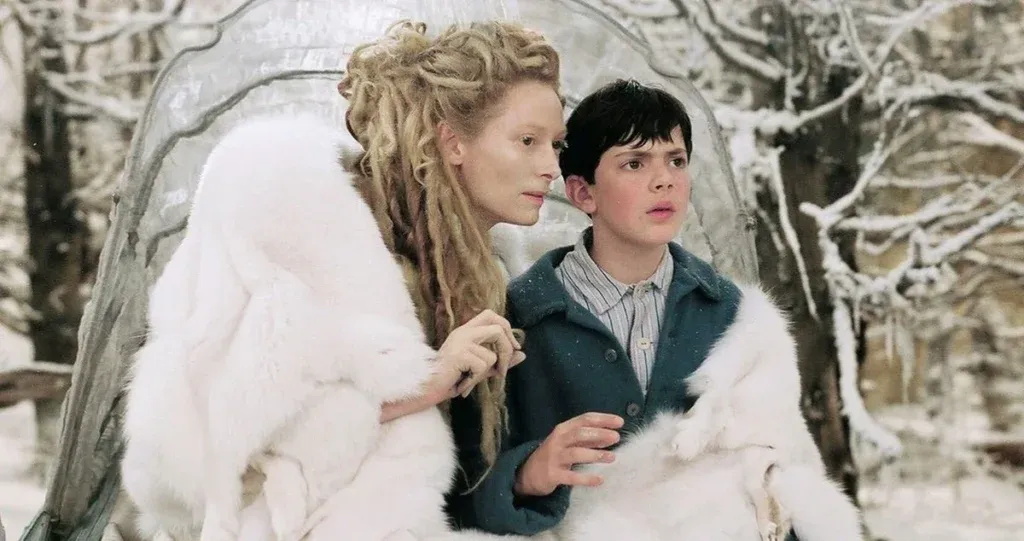
In most children’s movies, villains are loud. They scream, they have jagged teeth, and they wear black. Tilda Swinton’s performance went in the completely opposite direction, and that is why she remains one of the scariest villains of our childhood.
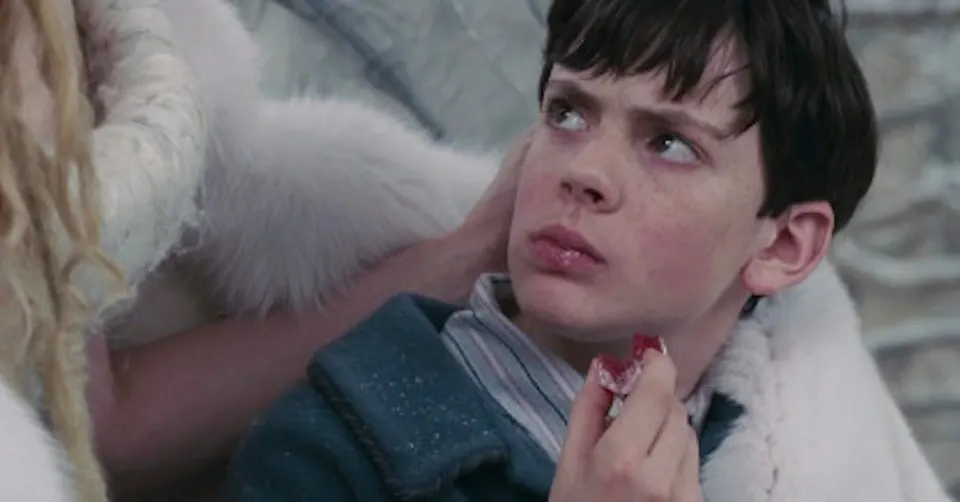
Swinton played the Witch as quiet, cold, and composed. She didn’t shout; she whispered. Her movements were fluid and graceful. This made her unpredictability terrifying. She represented a very adult kind of evil, the kind that smiles at you while offering you “Turkish Delight,” only to imprison you the moment you let your guard down.
For a young audience, this was a complex lesson in discernment: just because something looks beautiful (like the Ice Queen) or tastes sweet (like the enchanted candy), doesn’t mean it is good for you.
Why We Are Edmund (Not Peter)
When we watched this back in 2005, we all role-played as Peter (the High King) or Lucy (the Valiant). We wanted to be the heroes who never doubted.
But rewatching this as adults, the character who hits hardest is Edmund.
Edmund is the only character who feels truly modern. He is skeptical, sarcastic, and feels misunderstood by his siblings. He is a victim of manipulation. He is the “middle child” feeling unheard, easily swayed by the promise of validation.
His journey is the emotional anchor of the film.
- The Mistake: He betrays his family, not out of malice, but out of weakness and a desire to be “special.”
- The Consequence: He realizes the Witch never cared about him. The scene where he is shackled in the dungeon is a brutal depiction of regret.
- The Redemption: He doesn’t just say sorry; he bleeds for it. He destroys the Witch’s wand in the final battle, sacrificing himself to save the army.
For Gen Z, a generation often paralyzed by “cancel culture” and the pressure to be perfect, Edmund’s arc is incredibly healing. It tells us that you can make a massive mistake and still be redeemable. You can be the traitor and still end up a King. Aslan doesn’t shame Edmund; he says, “What’s done is done.” That is a level of forgiveness we all crave.
The Youngthare Verdict: A Portal We Still Need
Why does the music specifically the track “The Battle” by Harry Gregson-Williams still make us tear up?
It’s because The Chronicles of Narnia captures the feeling of empowerment. In the real world, we are just students, interns, or young professionals trying to pay rent. But in Narnia, we are Kings and Queens.
The film respects the intelligence of children. It didn’t shy away from war, death, or sacrifice. It treated its young audience as capable of understanding complex emotions.
So, this winter, when you inevitably rewatch this classic, pay attention to the details. Look at the hand-forged swords. Listen to the silence of the snow. And remember that the wardrobe is a metaphor. It’s a reminder that no matter how cold or “always winter” your life feels right now, the thaw is coming.
Next Stop on the Nostalgia Tour:
Fold up your fur coats and prepare for a climate shift. On December 18th, we are fast-forwarding to the Ice Age. (No, not the historical era, the one with the squirrel). Get ready to revisit the coolest herd in history. 🧊🥜
Also in Explained | The Bell Still Rings: Why ‘The Polar Express’ is the Tech-Noir Lullaby of Our Generation