Skip to content
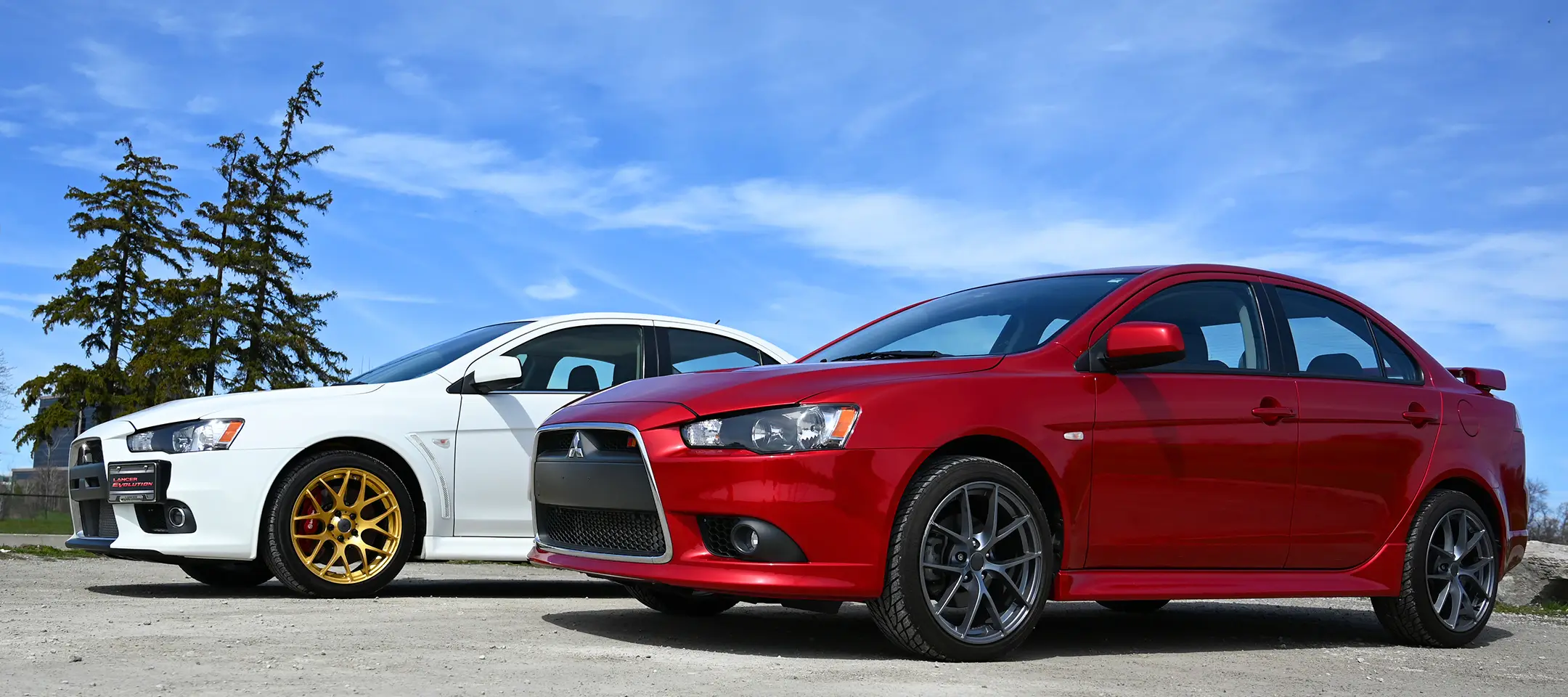
For car enthusiasts, few names spark as much fire as the Mitsubishi Lancer Evolution or simply “Evo” to its devoted fans. This compact sedan wasn’t just a car; it was a weapon, a giant-killer that humbled supercars on twisty roads, rally stages, and track days alike. With its turbocharged growl, all-wheel-drive grip, and unapologetic aggression, the Evo captured hearts from 1992 to 2016, creating a cult following that lives on through modified classics and endless forum stories.
Owners don’t just drive Evos they bond with them, chasing boost on mountain passes, dominating autocross, or simply grinning at the sight of those flared fenders in the garage. This is the thrilling tale of a machine that turned everyday enthusiasts into rally heroes.
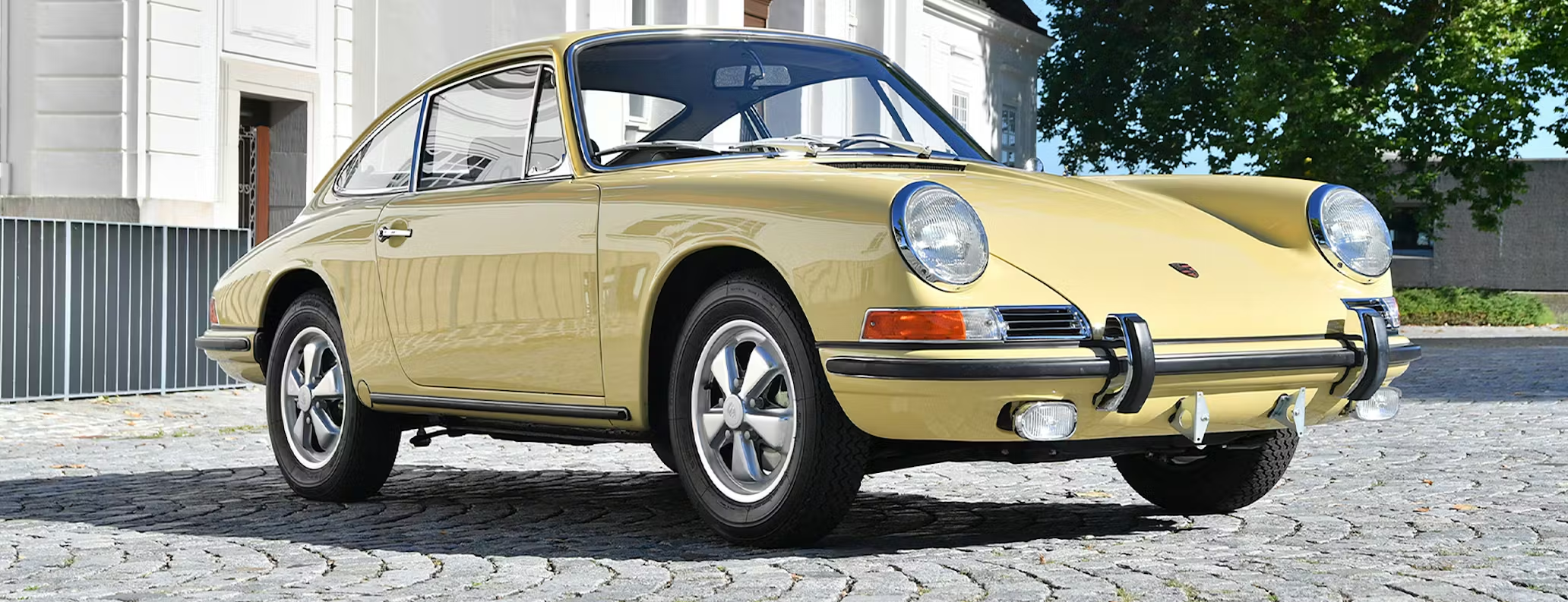
Read Previous Car Enthusiasm of the Editor: The Porsche 911 – An Enduring Love Affair with Driving Perfection
Born for the Stages – The Evo’s Rally Roots
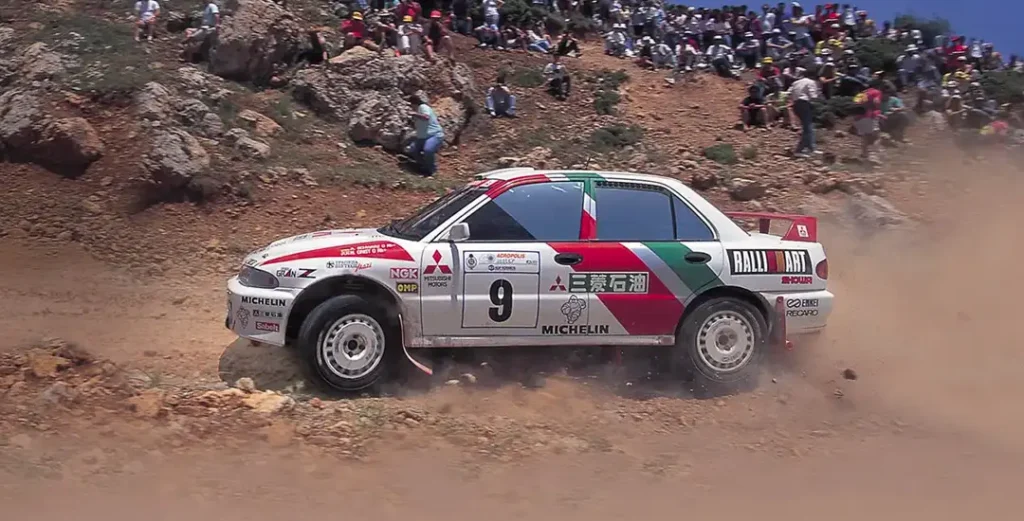
The Lancer Evolution story begins in 1992, when Mitsubishi needed a homologation special to compete in the World Rally Championship (WRC). The result? The Evo I (based on the Lancer GS-R platform), packing a 2.0-liter turbocharged 4G63 engine with 247 horsepower, advanced all-wheel drive, and a lightweight body. It was raw, purposeful, and instantly addictive.
Early owners recall the shock of that first boost hit, the Evo I’s torque steering you through corners like nothing else in its price range. Mitsubishi poured rally tech straight into road cars: limited-slip differentials, quick-ratio steering, and aggressive suspension that made every drive feel like a special stage.
The Evo II (1994) refined it with wider tracks and more power (up to 252 hp in Japan), while the Evo III (1995) unleashed 270 hp, iconic fog lights, and vortex generators turning it into a street monster. Enthusiasts love sharing tales of Evo IIIs in the ’90s, young drivers scraping savings for imports, then terrorizing local canyons with grip that defied physics.
The Golden Era – Mäkinen Magic and Peak Performance
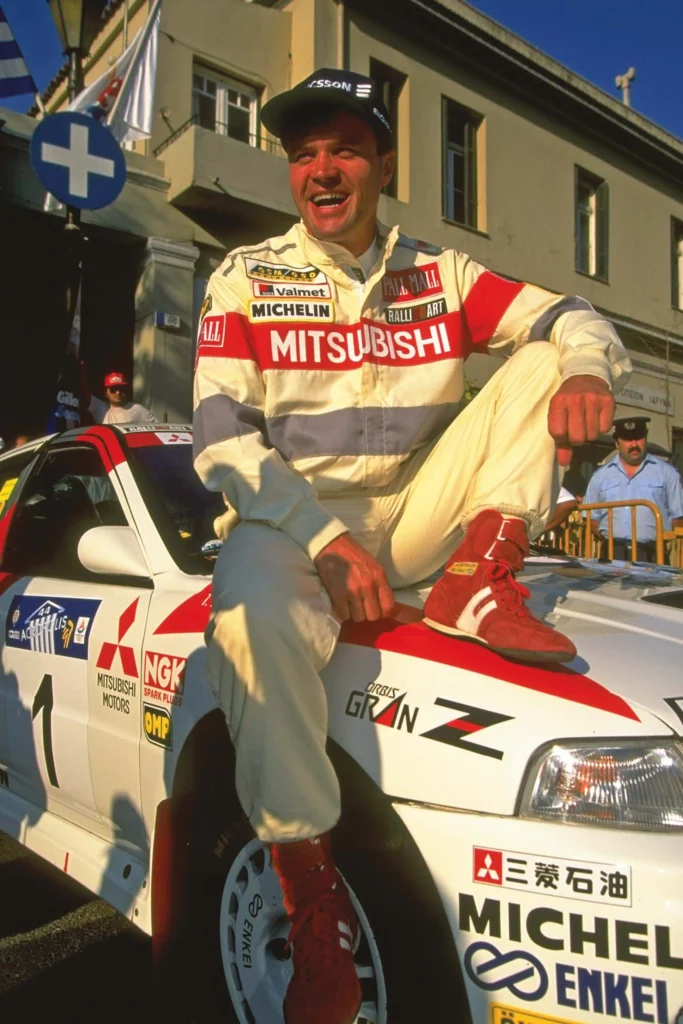
The mid-to-late 1990s brought Mitsubishi’s WRC dominance, led by Finnish ace Tommi Mäkinen. His four consecutive drivers’ titles (1996-1999) and the team’s 1998 manufacturers’ crown made the Evo a legend.
The Evo IV (1996) switched to a new platform with twin-scroll turbo and Active Yaw Control (AYC) for sharper cornering owners rave about how it rotated on throttle like a mid-engine car. The Evo V (1998) added wider fenders, bigger brakes, and Brembos, while the Evo VI (1999) introduced refined AYC and cooling upgrades.
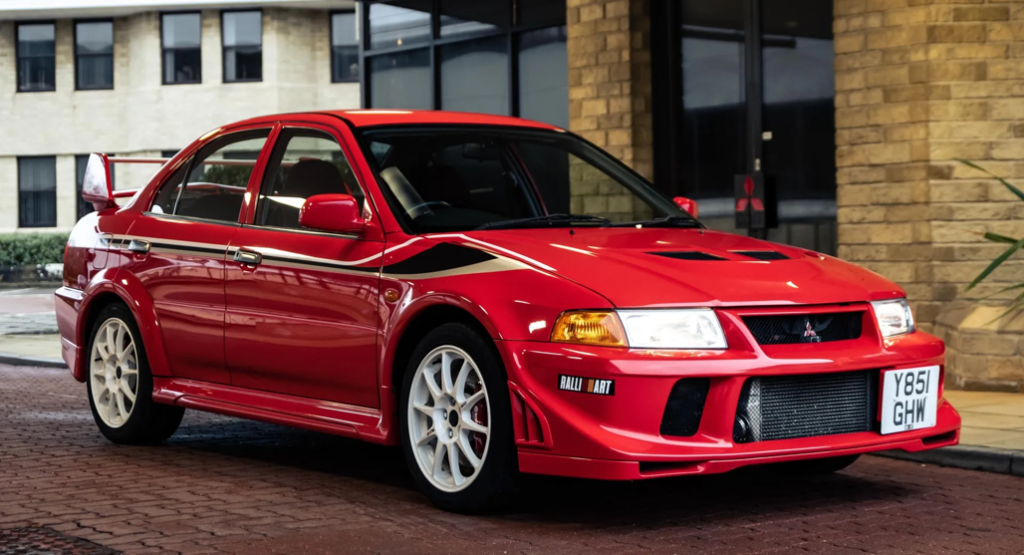
The pinnacle for many? The Evo VI Tommi Mäkinen Edition (2000) a red-and-black tribute with stiffer suspension, quicker steering, and unique Recaro seats. Limited to around 2,500 units, it’s a holy grail: fans recount epic hunts for clean examples, or weekend rallies recreating Mäkinen’s stages, the car still delivering chills decades later.
Later models kept evolving: Evo VII (2001) with Active Center Differential, Evo VIII (2003) gaining power and Super AYC, and Evo IX (2005) peaking naturally aspirated turbo performance at 280 hp (with more in reality via tuning).
Enthusiasts cherish these years stories of Evo meets where dozens gathered, swapping mods and burnouts, or road trips where the car’s reliability shone through thousands of miles.
The Modern Warriors – Evo X and the Bittersweet Finale
The Evo X (2007-2016) marked a shift: aluminum block engine, dual-clutch SST transmission option, and Super All-Wheel Control (S-AWC) for even smarter torque vectoring. Official output hit 291 hp, but the 4B11 engine proved immensely tunable — many owners push 400-600 hp reliably, turning them into drag-strip terrors or time-attack stars.
The Evo X felt more refined yet retained the raw edge: forums buzz with anecdotes of daily-driven X’s surviving harsh winters thanks to AWD mastery, or track days where they outhandled dedicated sports cars.
Production ended in 2016 with the Final Edition limited to 1,000 units (Japan only, though some exported), boasting 303 hp, Bilstein/H&R suspension, and unique badges. Owners who snagged one describe it as emotional: the last true Evo, a farewell roar that left fans heartbroken yet proud.
Why the Evo Endures – Tuning Culture and Everyday Thrills
What made the Evo special? Accessibility. Starting affordable, it punched way above outrunning Porsches and Lambos on backroads while serving as reliable daily transport. The massive aftermarket from coilovers to big turbos let owners personalize endlessly.
Enthusiast stories abound: one famous tale involves an Evo VIII owner in the U.S. consistently beating Corvette owners at stoplight grands, or groups organizing “Evo caravans” for spirited drives, the turbo whooshes echoing like a rally pack.
Even today, clean low-mile Evos command premium prices, with modified examples starring at shows. The community thrives, meets, Facebook groups, YouTube builds keeping the flame alive.
Though Mitsubishi shifted focus post-2016 (no direct successor yet, despite rumors), the Evo’s legacy inspires. Whispers of electric or hybrid revivals excite fans, imagining S-AWC with instant torque.
For anyone who’s felt an Evo’s boost surge, heard the blow-off valve hiss, or carved a corner with unbreakable grip, it’s more than a car. It’s freedom, rebellion, and pure joy on four wheels. The Lancer Evolution didn’t just dominate rallies; it won hearts forever.
Read the Nostalgia Car Enthusiasm in this blog: Car Enthusiast