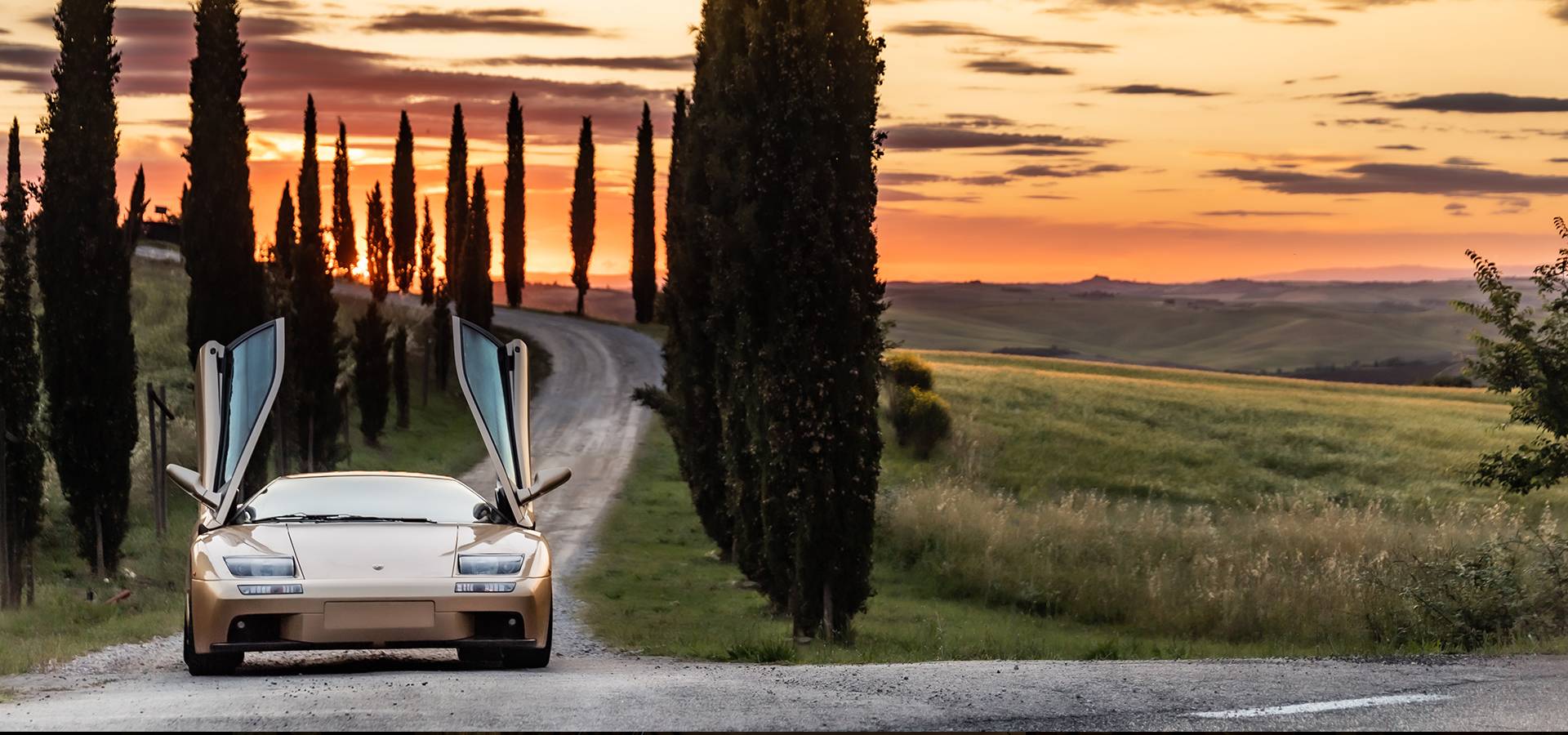
There’s something undeniably devilish about the Lamborghini Diablo a supercar that didn’t just arrive in 1990; it exploded onto the scene with a thunderous V12 soundtrack, scissor doors slicing the air, and a presence that made every other exotic feel tame. For car enthusiasts, the Diablo isn’t just a machine from Sant’Agata Bolognese; it’s the raw, unfiltered soul of Lamborghini at its wildest.
Named after a legendary Spanish fighting bull meaning “devil,” this mid-engine beast succeeded the iconic Countach and became the first production Lamborghini to shatter the 200 mph barrier. Over its 11-year run, roughly 2,900 examples were built, each one a rolling testament to excess, engineering bravery, and pure driving drama. Owners still rave about the way it grabs you by the collar that visceral surge, the mechanical theater, and the way it turns heads like few cars ever have.
Read Previous Car Enthusiasm of the Editor: The Mitsubishi Lancer Evolution – The Rally-Bred Legend That Defined a Generation
From Concept to Legend: The Lamborghini Diablo’s Dramatic Birth
Lamborghini began sketching the Diablo’s future in the late 1980s as the Countach’s successor. Marcello Gandini, the genius behind the Countach, penned the initial design a sharper, more aerodynamic wedge with those signature scissor doors. When Chrysler acquired Lamborghini in 1987, the American team refined it, softening the sharp edges for better cooling and real-world usability while keeping the aggressive stance intact.
Unveiled in 1990, the first Diablo was a revelation. Powered by a 5.7-liter DOHC V12 with multi-point fuel injection, it produced 492 horsepower and 428 lb-ft of torque. That massive engine sat longitudinally behind the driver, sending power to the rear wheels through a five-speed manual. Performance? Brutal: 0-60 mph in about 4.5 seconds and a verified top speed exceeding 202 mph. It was the first Lamborghini to hit those numbers, and testers described it as a rocket that demanded respect no electronic nannies, just raw feedback through the steering and that spine-tingling V12 howl.
Enthusiasts who drove early models still share stories of the “diabolical” experience: the way the car would lift its nose under hard acceleration, the heat soaking through the cabin on hot days, and the sheer theater of those upward-swinging doors. One owner anecdote that circulates in forums involves a Diablo driver on an empty Autobahn who hit 200 mph for the first time the rush was so intense he pulled over just to catch his breath and laugh out loud.
Design Drama and Mechanical Mastery
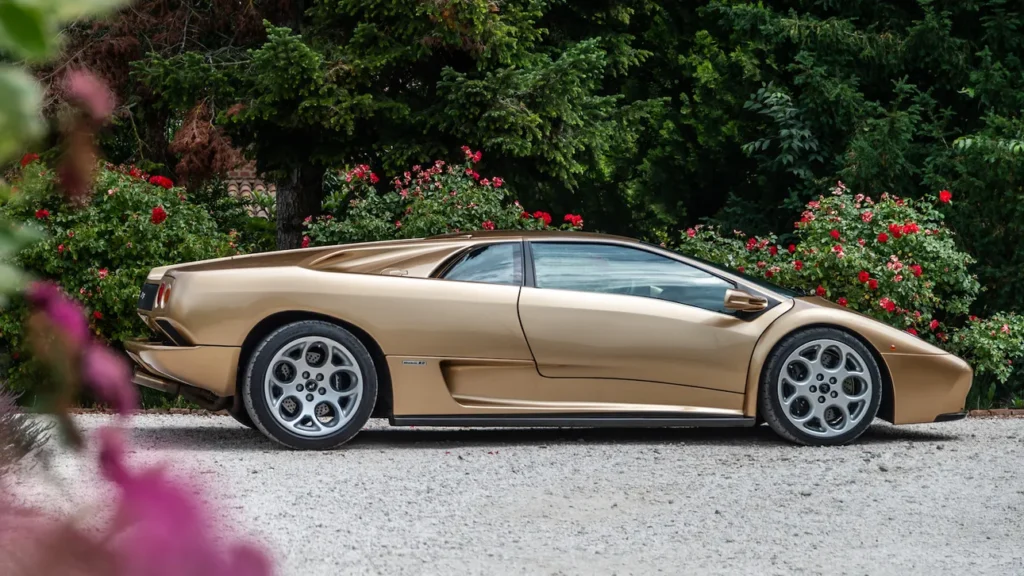
The Diablo’s beauty lies in its perfect blend of menace and elegance. Low and wide with a dramatic cab-rearward stance, it featured pop-up headlights (on early models), massive air intakes, and those unmistakable rear haunches that screamed power. The interior was pure Lamborghini theater, leather everywhere, a gated shifter, and gauges that looked like they belonged in a fighter jet. It wasn’t luxurious in the modern sense; it was purposeful, with that unmistakable Italian flair that made every drive feel like an event.
Under the skin, the Diablo evolved dramatically. The original was rear-wheel drive only, but in 1993 Lamborghini introduced the Diablo VT the brand’s first all-wheel-drive production car, featuring a viscous traction system that transformed its handling. Suddenly, the Diablo could put down power in any weather without losing that tail-happy character drivers loved.
Power climbed with each update. The Diablo SE30 (1993-1995), built for Lamborghini’s 30th anniversary, was a lighter, more focused special edition limited to just 150 units. It cranked out 523 horsepower and felt like a street-legal racer. Fifteen of those became the insane SE30 Jota track specials with 595 horsepower, rare beasts that collectors hunt to this day. Then came the Diablo SV (Super Veloce) in 1995, a stripped-back RWD model with even more aggressive tuning, and the VT Roadster for open-air thrills.
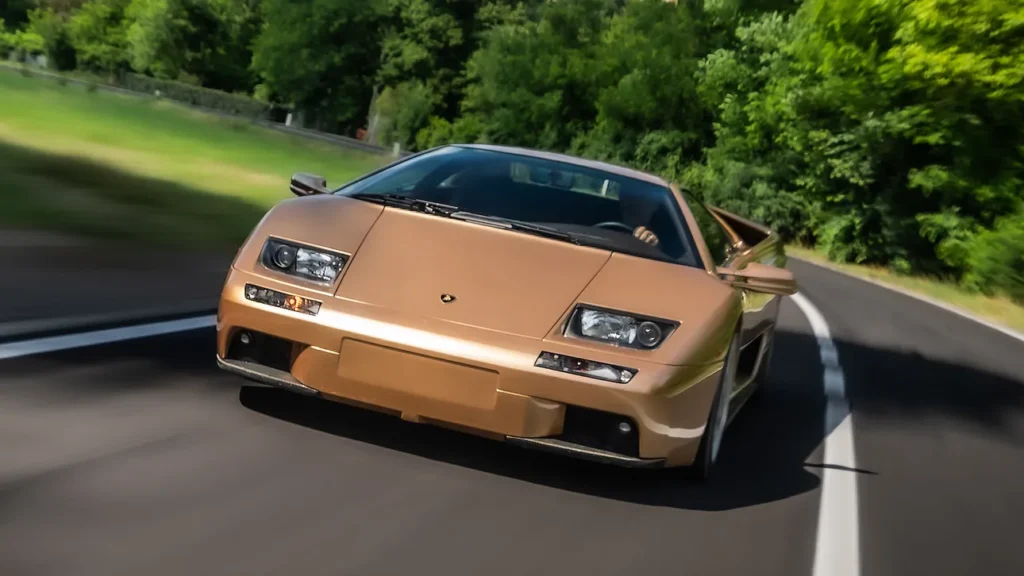
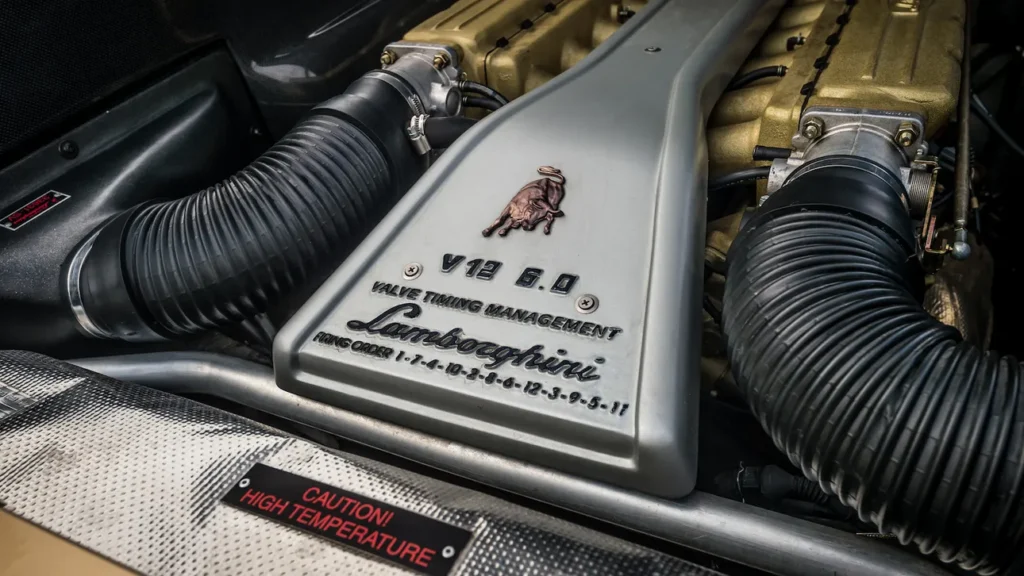
By the late 1990s, the Diablo GT and final Diablo 6.0 variants pushed the envelope further. The 6.0-liter V12 delivered up to 575 horsepower in road form, with the GT variant hitting 567 hp. These later cars added power steering, ABS, and refined aerodynamics, making the Diablo more livable without diluting its wild personality. Owners of 6.0 models often describe them as the sweet spot ferocious yet refined enough for long grand tours, with that unmistakable V12 crescendo that builds like a symphony of thunder.
Cultural Icon and Enthusiast Legends
The Diablo wasn’t just a car for the track or canyon roads; it became a pop-culture superstar. It starred in films like Dumb and Dumber (that bright red example driven by Jim Carrey is burned into movie buffs’ memories), appeared in countless video games, and even featured in music videos. Celebrities flocked to it: Nicolas Cage owned a prized SE30, Jay Leno raved about his, and stars like Mike Tyson, Dennis Rodman, and Mario Andretti added one to their garages. One famous anecdote involves a Diablo owner in the 1990s who used his car for a cross-country Cannonball-style run the V12’s reliability and speed made it a legend among underground enthusiasts.
For everyday fans, the Diablo represented the last of the analog supercars. No traction control in early models, no fancy electronics just you, the road, and 500-plus horses fighting for traction. Modified examples dominate shows today, with owners swapping tales of turbo upgrades, exhaust notes that rattle windows, or simply the joy of firing up that V12 in a quiet garage at dawn. The community is tight-knit; forums buzz with restoration stories, and clean low-mileage Diablos now command serious collector money, proving its timeless appeal.
The Diablo’s Lasting Legacy
Production wrapped in 2001 with the Diablo 6.0 models, after which the Murciélago took center stage. Yet the Diablo’s influence lingers. It bridged Lamborghini’s wild Countach days with the more modern era, proving that a V12 supercar could be faster, more usable, and even more outrageous. Today, as Lamborghini embraces hybridization and electrification, the Diablo stands as a pure analog icon a reminder of when supercars were loud, dramatic, and utterly intoxicating.
Whether you’re lucky enough to own one, spot one at a concours, or simply dream about that scissor-door moment, the Lamborghini Diablo delivers something special: pure, devilish excitement that never fades. For enthusiasts, it’s more than history, it’s a legend that still roars in the hearts of anyone who loves cars with soul.
Read the Nostalgia Car Enthusiasm in this blog: Car Enthusiast