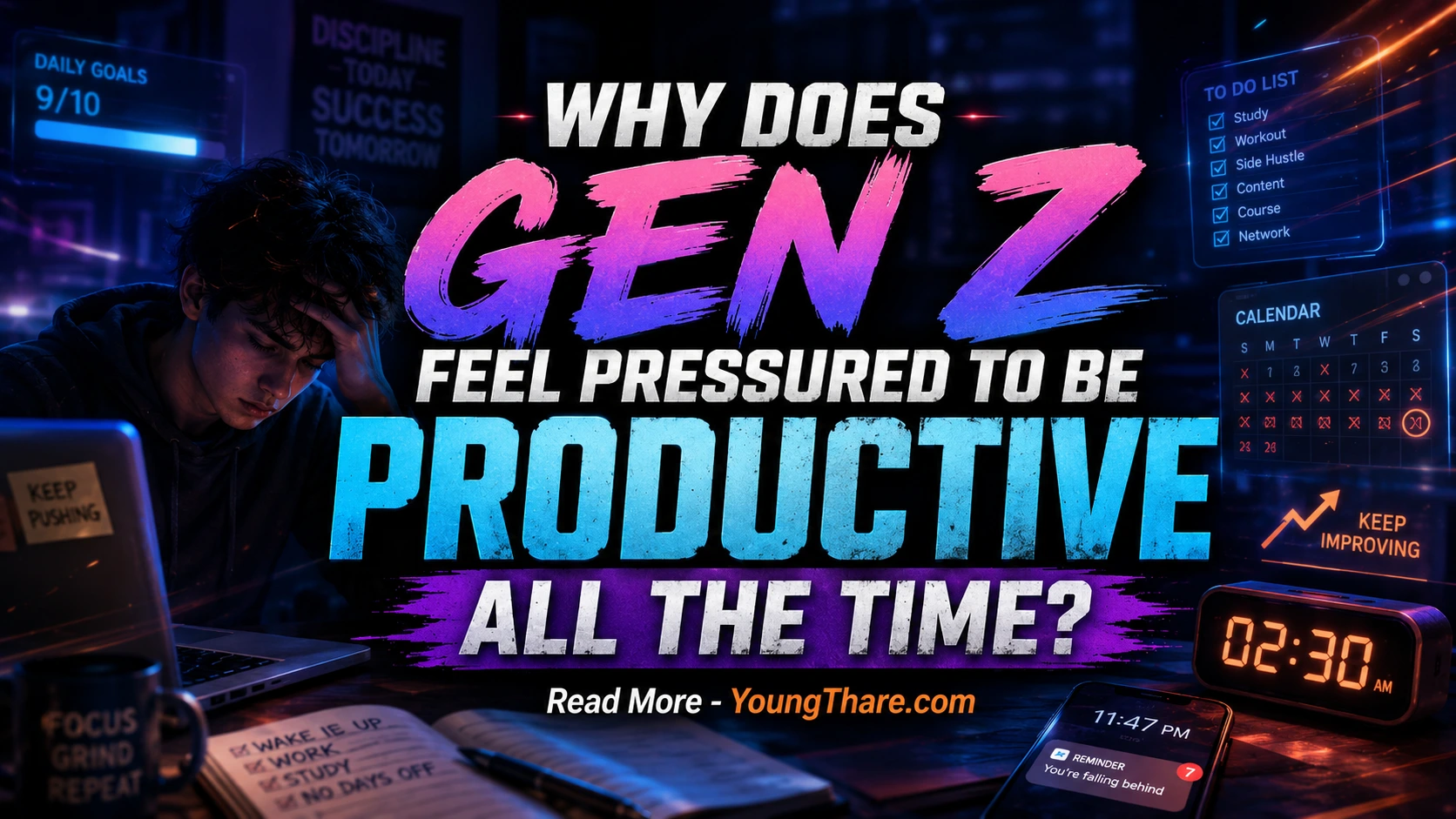
Why does Gen Z feel pressured to be productive all the time? For Gen‑Z, productivity isn’t just a goal, it’s an expectation. From school to side hustles, internships to content creation, the pressure to always be “doing something” has become a defining feature of their lives. Social media glorifies hustle culture, algorithms reward constant output, and workplaces demand efficiency. But beneath the polished reels and LinkedIn updates lies a silent struggle: the exhausting demand to be productive all the time.
The Rise of Hustle Culture
Gen‑Z grew up in an era where hustle culture was celebrated. Influencers flaunted “grind” lifestyles, entrepreneurs preached 4 a.m. routines, and motivational content equated rest with laziness. Productivity became a badge of honor, a way to prove worth. For young people entering adulthood, this narrative shaped their identity, success meant constant motion, and slowing down felt like failure.
Read the Previous Article: Why Many Gen‑Z Graduates Feel Lost: The Reality Behind the Degree
Social Media’s Role in Gen Z Feel Pressured to Be Productive
Platforms like Instagram, TikTok, and LinkedIn amplify productivity pressure. Every scroll reveals peers launching startups, posting achievements, or showcasing side hustles. Even leisure activities are packaged as “productive”, reading self‑help books, practicing mindfulness, or learning new skills. For Gen‑Z, the line between genuine rest and performative productivity blurs, creating anxiety about whether they’re “doing enough.”
The Fear of Falling Behind
Global competition intensifies the pressure. Gen‑Z compares themselves not just to classmates but to peers worldwide. The fear of falling behind academically, professionally, or socially drives them to overwork. In a digital economy where opportunities seem endless, missing out feels catastrophic. Productivity becomes a shield against insecurity, but also a source of burnout.
The Mental Health Toll
Constant productivity comes at a cost. Anxiety, burnout, and depression are rising among Gen‑Z. The expectation to always be “on” erodes mental health, leaving little room for rest or reflection. Sleep deprivation, stress, and emotional exhaustion become normalized. Ironically, the pursuit of productivity often undermines the very well‑being needed to sustain it.
Read the Previous Article: Gen Z’s Wake-Up Call – Are We Losing Our Edge in a Digital World?
Redefining Productivity – Gen‑Z’s Perspective
Despite the pressure, Gen‑Z is also questioning traditional definitions of productivity. For them, it’s not just about output, it’s about purpose. Many are rejecting toxic hustle culture, embracing balance, and valuing authenticity. Productivity is being redefined as meaningful engagement rather than endless activity. This shift reflects a generational pushback against unrealistic expectations.
The Role of Employers and Institutions
Workplaces and universities play a role in perpetuating productivity pressure. Internship requirements, performance metrics, and constant evaluations reinforce the idea that worth equals output. Yet some institutions are beginning to adapt, offering flexible schedules, mental health support, and recognition of holistic growth. For Gen‑Z, these changes are essential to breaking the cycle of overwork.
How Gen‑Z Can Navigate the Pressure
- Set Boundaries: Learn to say no to unrealistic demands.
- Value Rest: Recognize that rest is productive for mental health.
- Seek Community: Share struggles with peers to normalize balance.
- Redefine Success: Focus on values and passions rather than constant output.
- Challenge Narratives: Resist social media’s glorification of hustle culture.
The Future of Productivity for Gen‑Z
The pressure to be productive all the time won’t disappear overnight. But Gen‑Z is leading a cultural shift. By questioning hustle culture, embracing balance, and demanding systemic change, they are rewriting what productivity means. In 2026, the challenge isn’t just to work harder, it’s to work smarter, healthier, and more authentically.
Read the Previous Content in Blog: Learn & Improve