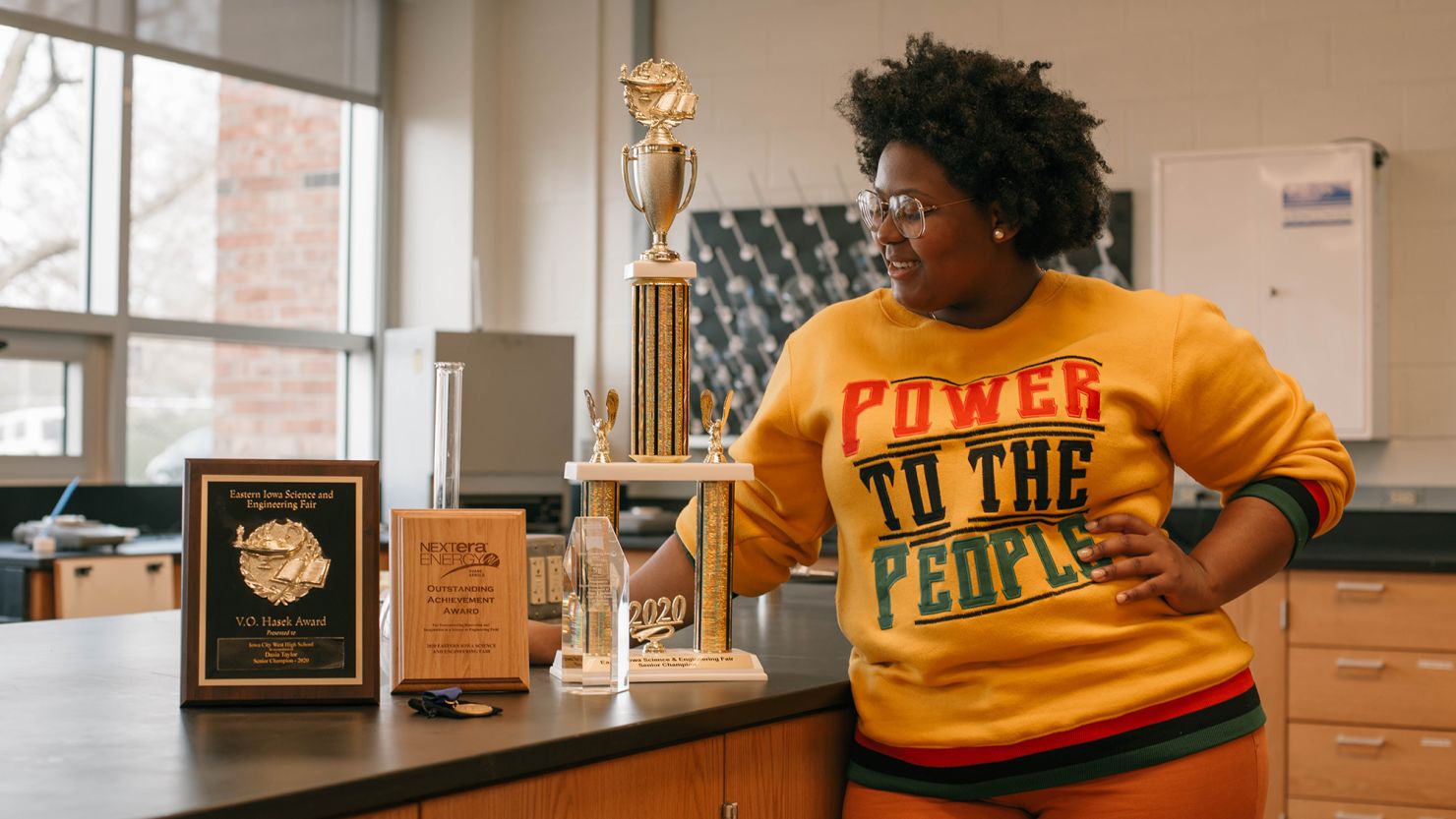
Dasia Taylor invented color-changing sutures at just 17 years old, turning a simple science fair idea into a powerful tool for early infection detection. Her story shows that groundbreaking research can start with everyday questions and accessible materials.
Born on April 6, 2004, in Chicago and raised in Iowa City, Iowa, Dasia grew up with a natural curiosity about the world. As a student at Iowa City West High School, she channeled that curiosity into science classes, especially AP Chemistry. One day, while researching advanced medical technologies, she learned about “smart sutures” high-tech threads that could detect infections using electronics and smartphone apps. These devices were impressive, but they were expensive and unavailable in many parts of the world. Dasia wondered: Could there be a simpler, cheaper way to solve the same problem?
Surgical site infections affect millions of patients every year, leading to longer hospital stays, higher costs, and sometimes even death. In developing countries, where resources are limited, these infections are especially dangerous. Dasia also noticed that traditional signs of infection, like redness or swelling can be harder to spot on darker skin tones, creating inequities in care. Motivated by a desire to make healthcare more accessible and equitable, she decided to tackle the challenge herself.
Read Previous Inspiring Content: How NutzyCraft Is Building a Digital Home for Sri Lankan Creators
Dasia Taylor Invented Color-Changing Sutures – Understanding the Science Behind the Invention
Dasia’s breakthrough came from basic chemistry. Healthy skin and wounds are slightly acidic, with a pH around 5. When bacteria cause an infection, the pH rises and becomes more alkaline, often reaching 8 or 9. She needed a natural substance that could visibly signal this pH shift without any fancy equipment.
After testing several options, she discovered that beetroot juice was the perfect indicator. Fresh beet juice stays bright red in acidic conditions but turns dark purple when the pH climbs to infection levels. The color change happens quickly often within about five minutes in lab tests.
Next, she had to find the right thread. It needed to be strong enough to hold a wound closed, safe for medical use, and able to absorb and hold the beet dye effectively. After experimenting with many materials (she juiced dozens of beets over months), Dasia settled on a cotton-polyester blend. This combination absorbed the dye well, showed a clear color shift from vibrant red to deep purple, and maintained structural integrity. The purple shade would later fade to a light gray after a few days if left untreated.
Her design was intentionally low-tech. Unlike electronic smart sutures that require batteries, sensors, and apps, Dasia’s version relies only on the natural properties of beets and basic suture thread. This makes it affordable, easy to produce, and usable anywhere from modern hospitals to remote clinics.
The Journey Through Science Fairs and National Recognition
What started as a classroom project quickly gained momentum. Dasia entered her invention in local and state science fairs, where it impressed judges with its creativity and real-world potential. She won top honors at several competitions, including first place and $1,500 in the University of Iowa’s Jacobson Institute Innovator Competition in 2021.
The pinnacle came when she became one of just 40 finalists in the prestigious Regeneron Science Talent Search America’s oldest and most respected high school science and math competition. Out of thousands of applicants, her project stood out for its originality, scientific rigor, and focus on global health equity. She also received the Glenn T. Seaborg Award for her contributions to science education and research.
National media took notice. Dasia appeared on shows like The Ellen DeGeneres Show, where she received $10,000 and a fun trophy for her invention. She was featured in Smithsonian Magazine, PBS NewsHour, TODAY, and many others. Her story inspired countless students by proving that age and resources are not barriers to meaningful innovation.
From High School Project to University and Entrepreneurship
After graduating from Iowa City West High School in 2021, Dasia enrolled at the University of Iowa. She is majoring in global health studies, a field that perfectly aligns with her passion for equitable healthcare solutions. As a student balancing academics with hands-on work, she continues to refine her ideas and build real impact.
In college, Dasia founded VariegateHealth, a medical device company. The name “Variegate” has a double meaning: it refers to changing color (like her sutures) and also means “to diversify.” As a Black queer founder, she intentionally built the company to create inclusive spaces in medtech. While she is still pursuing a patent for the color-changing sutures (a process that can take years), she remains committed to refining the technology for use in developing countries where surgical infections hit hardest.
Dasia has also turned her attention to inspiring the next generation. She created NERD STEM Box (branded under her playful nickname “Thee Head Nerd”), a series of hands-on science kits designed for kids to experience real experiments at home. One popular edition, the “Ooey Gooey Science Edition,” includes activities like making “Liquid Worms” through spherification using safe household-friendly materials. The kits connect everyday science to real life and have reached hundreds of children. In 2025, she showcased the box on Good Morning America, won first place and $3,500 at the University of Iowa’s John Pappajohn Entrepreneurial Center (JPEC) Startup Incubator Demo Day, and continued advancing it through university entrepreneurship programs.
Awards, Advocacy, and Lasting Impact
Dasia’s achievements extend far beyond her invention. In 2023, she was named Iowa’s Woman of the Year by USA Today for her community influence and trailblazing work. That same year, Black Enterprise included her in its prestigious 40 Under 40 list for Tech & STEM. She has been featured in the Good Night Stories for Rebel Girls book series and has spoken at events like Aspen Ideas Health, encouraging young people especially those from underrepresented backgrounds to see themselves as scientists and innovators.
She has received additional honors, including the Dr. Malcolm Woodland Award for her contributions to medtech, and has worked in roles that combine research, advocacy, and public health. Through it all, Dasia emphasizes equity: making sure that life-saving innovations reach the communities that need them most.
Lessons for Young Students and Undergraduates in Research
Dasia Taylor’s journey offers powerful inspiration for anyone who loves the research field. Here are a few key takeaways:
- Start with real problems: Look around your community or the world for challenges that matter to you. Dasia didn’t invent for fame, she wanted to fix unequal access to healthcare.
- Use what you have: You don’t need a million-dollar lab. Beets from the grocery store and basic thread were enough to spark a national story.
- Embrace experimentation and failure: Dasia tested many dyes and threads before finding the right combination. Persistence turns setbacks into discoveries.
- Think about impact and equity: Great research isn’t just about new technology, it’s about who benefits. Consider how your work can help people who are often overlooked.
- Share your work and lift others: From science fairs to NERD STEM Boxes, Dasia has always focused on education and mentorship. Building community multiplies your impact.
Whether you’re a high school student tinkering in a classroom or an undergraduate diving into lab work, remember: the next big idea can come from someone exactly like you. Curiosity, creativity, and courage are more important than perfect conditions.
Today, at 22 years old, Dasia continues her studies, grows her companies, and advocates for inclusive STEM. Her color-changing sutures may one day save lives in clinics worldwide, but her greatest legacy might be the thousands of young minds she has inspired to pursue research with heart and purpose.
Dasia Taylor proves that one thoughtful question in a high school lab can ripple outward and change the world. What problem will you choose to solve?
Read the Previous Inspiring Content in Blog: Entrepreneurship