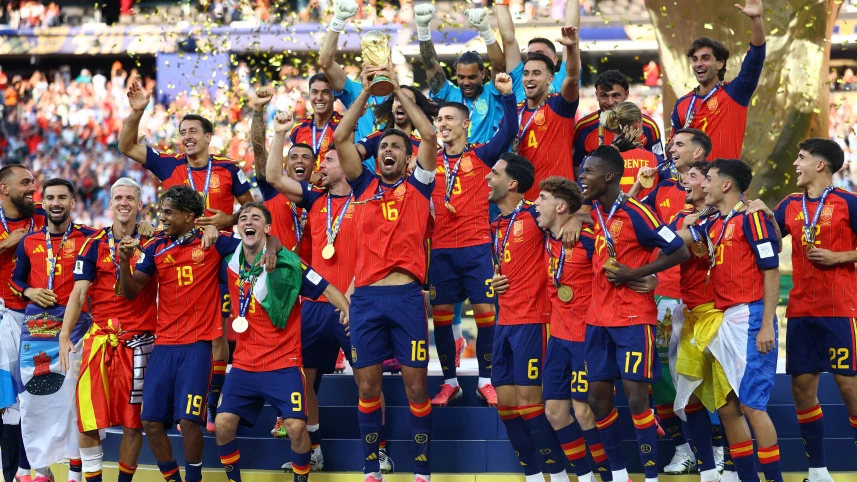
Spain are world champions for the second time. Ferran Torres’ 106th-minute goal to make Spain 1–0 Argentina, finally broke Argentina’s resistance, completing a campaign built on control, patience and one of the greatest defensive records in World Cup history.
The moment Argentina’s resistance finally broke with
For 105 minutes, Spain had almost everything except the goal.
They controlled the ball, dictated the rhythm and repeatedly forced Argentina backwards, yet every attack appeared to meet either a blue-and-white shirt or Emiliano Martínez. The Argentine goalkeeper produced 12 saves during a performance that kept the defending champions alive long after Spain appeared capable of taking command.
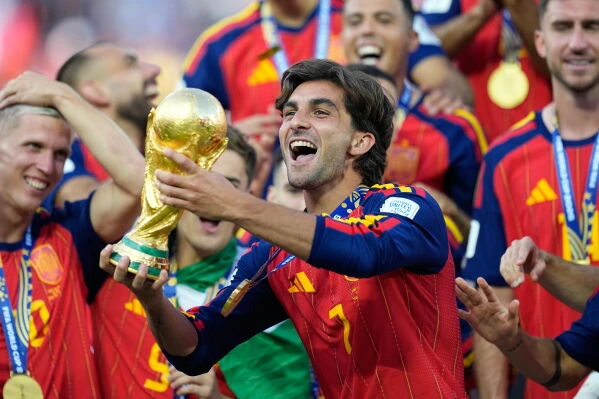
Then, in the 106th minute, Ferran Torres found the breakthrough.
Introduced from the bench, Torres drove Spain’s winning goal beyond Martínez and under the crossbar, transforming an evening of growing frustration into the defining moment of the 2026 FIFA World Cup.
Spain defeated Argentina 1–0 after extra time, reclaiming the trophy 16 years after their first World Cup triumph in South Africa. Argentina’s Enzo Fernández was later dismissed after receiving a second yellow card during stoppage time, but by then the contest had already tilted decisively towards Spain.
It was not a final overflowing with goals. It was instead a contest about control, resistance and the discipline required to remain patient when the expected opening refuses to appear.
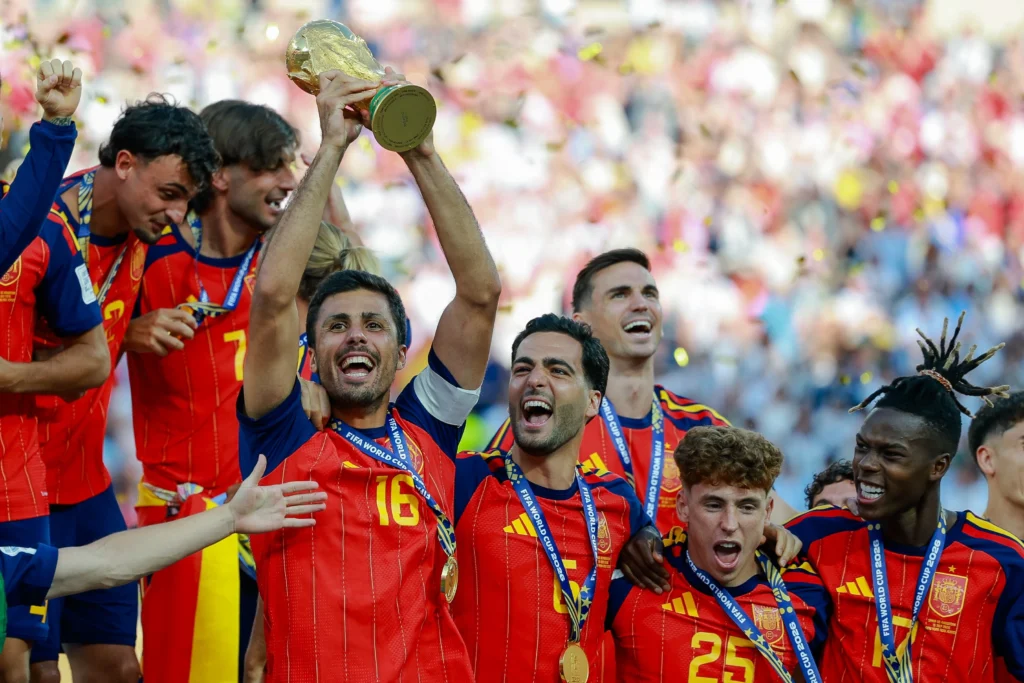
Why Spain deserved the title
Spain did not win simply because they possessed the ball for longer periods. Their superiority came from what they did immediately after losing it.
Rodri repeatedly closed the spaces through which Argentina hoped to counterattack, while Spain’s defenders maintained the courage to hold an advanced line. Pau Cubarsí and Aymeric Laporte rarely allowed Argentina’s forwards to settle, and the pressure surrounding Lionel Messi prevented him from consistently controlling the game in the areas where he is most dangerous.
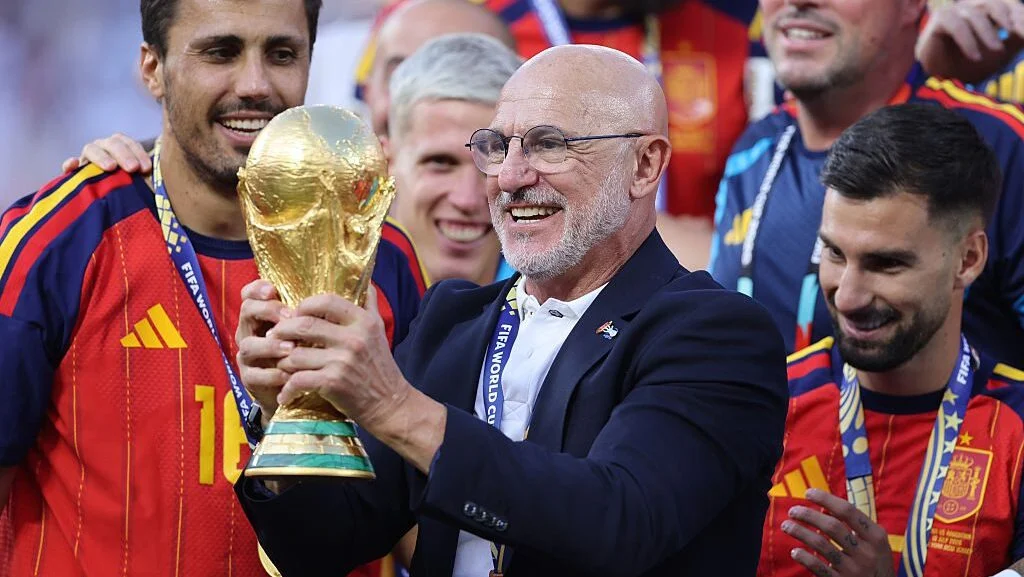
Lamine Yamal stretched Argentina’s defensive shape, Spain circulated the ball without panicking, and Luis de la Fuente’s substitutions preserved their attacking threat as tiredness began to alter the match.
Argentina’s strategy was understandable. They defended compactly, trusted Martínez and waited for moments in transition. For long periods, it worked. However, Spain continued asking the same difficult questions until Argentina no longer had the physical or positional clarity to answer them.
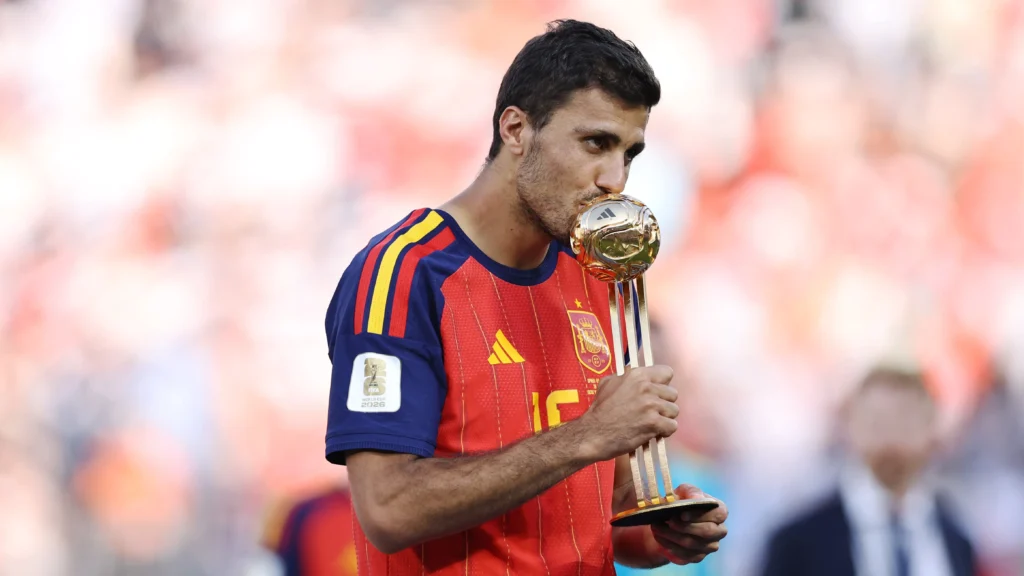
Rodri’s ability to control those questions across the entire tournament ultimately earned him the adidas Golden Ball as its outstanding player.
Argentina lost the trophy, but not their stature
Defeat should not erase what Argentina achieved.
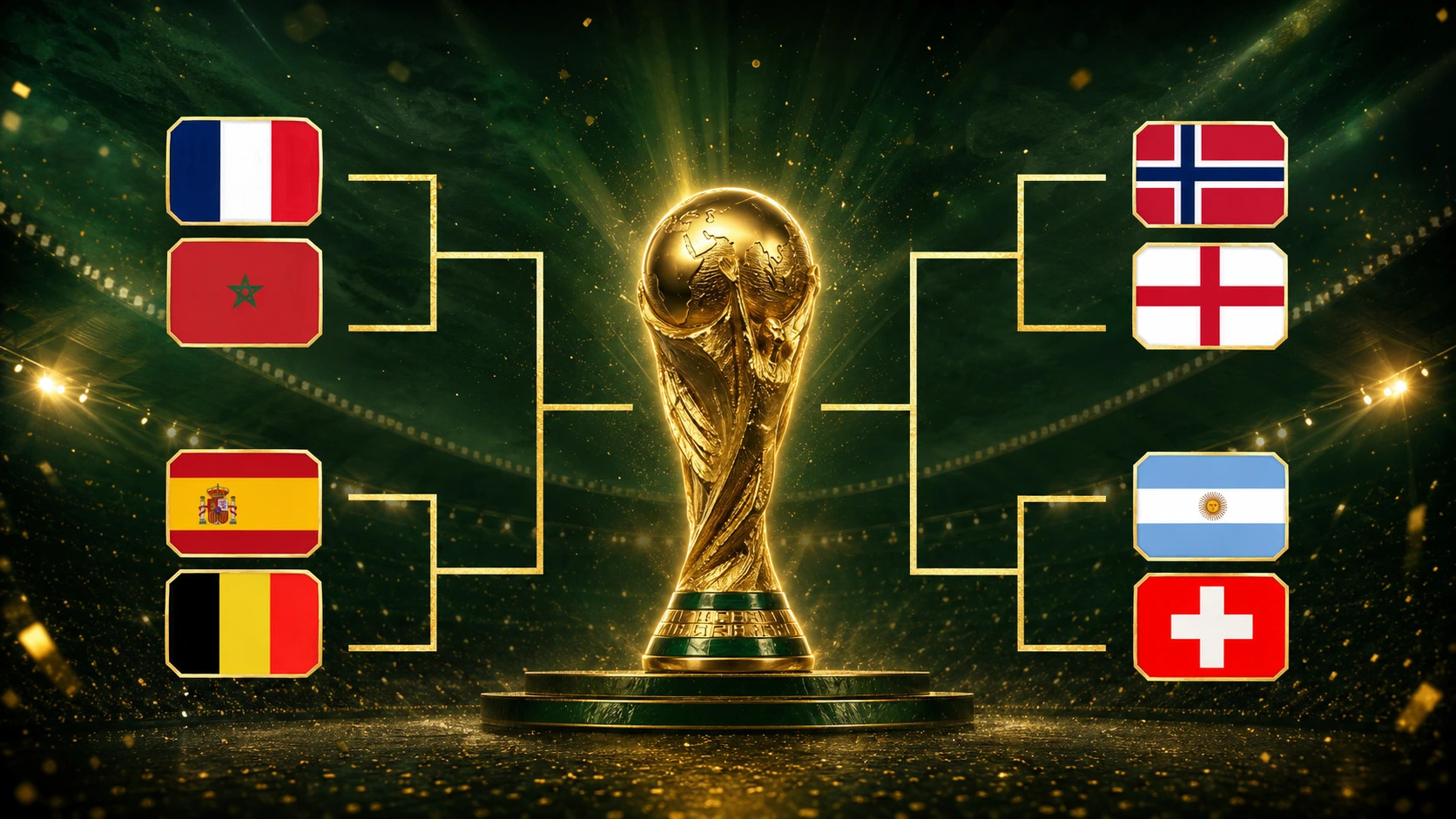
They arrived as defending champions and became only the sixth nation to reach consecutive World Cup finals. Their campaign repeatedly demanded resilience: they recovered from two goals down to defeat Egypt 3–2 in the Round of 16, survived a demanding quarter-final against Switzerland and then eliminated England 2–1 through Lautaro Martínez’s injury-time winner.
In the final, Martínez delivered an extraordinary individual display, while the players ahead of him absorbed sustained pressure without losing their structure. Messi could not produce one final decisive intervention, but his wider tournament remained historic.
At 39, he finished with eight goals, received the Silver Ball and Silver Boot, and extended his World Cup appearance record to 34 matches. His hat-trick against Algeria had already made him the oldest player to score three times in a World Cup match.
Argentina were not outclassed. They were eventually worn down by the tournament’s most complete team.
A route built on control rather than chaos
Spain’s journey to the trophy followed a remarkably consistent pattern.
They rarely allowed opponents to dictate matches, survived the moments when their own finishing deserted them and became increasingly authoritative during the knockout rounds. After advancing through the expanded Round of 32, they eliminated Portugal, edged Belgium and then defeated France 2–0 in a semi-final in which their midfield pressure and recovery of second balls proved decisive.
Most importantly, Spain conceded only one goal in eight matches.
That became the best defensive record ever recorded by a World Cup-winning team. Seven clean sheets across an eight-match campaign were not produced through passive football, but through Spain’s ability to defend by controlling territory, possession and the moments immediately following turnovers.
The records that changed the history books
Spain’s second title created several historic achievements.
They became the first nation to hold the men’s and women’s FIFA World Cup titles simultaneously, having won the Women’s World Cup in 2023. De la Fuente, aged 65, became the oldest coach to win the men’s competition, while teenagers Yamal and Cubarsí became world champions before their twentieth birthdays.
The final also extended Spain’s unbeaten sequence to 38 matches, following the 37-match run with which they entered the decider. Their combination of the European crown and World Cup now confirms this generation as more than an exciting young side: it has become an era-defining team.
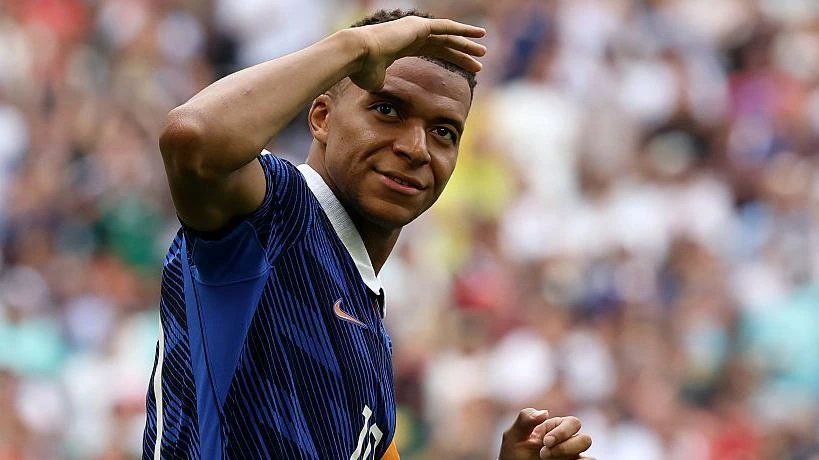
Elsewhere, Kylian Mbappé rewrote the competition’s scoring record. His two goals in the third-place match took him to 22 career World Cup goals, moving him beyond Messi’s total of 21. Mbappé also finished this tournament with ten goals, becoming only the fourth man to reach double figures in a single edition and securing a second successive Golden Boot.
Mbappé, Messi and Jude Bellingham all scored at least seven times, the first occasion on which three players reached that mark at the same World Cup. The expanded competition concluded after 104 matches, with the final two fixtures taking the tournament beyond the 297 goals already scored following the semi-finals.
England claim bronze in a ten-goal storm
England secured third place by defeating France 6–4 in a remarkable bronze final in Miami.
Bukayo Saka scored a hat-trick as England survived a fierce second-half response from France. Mbappé scored twice for the French, breaking the all-time World Cup goals record despite his team finishing fourth. Jude Bellingham completed England’s scoring and ended the tournament with seven goals.
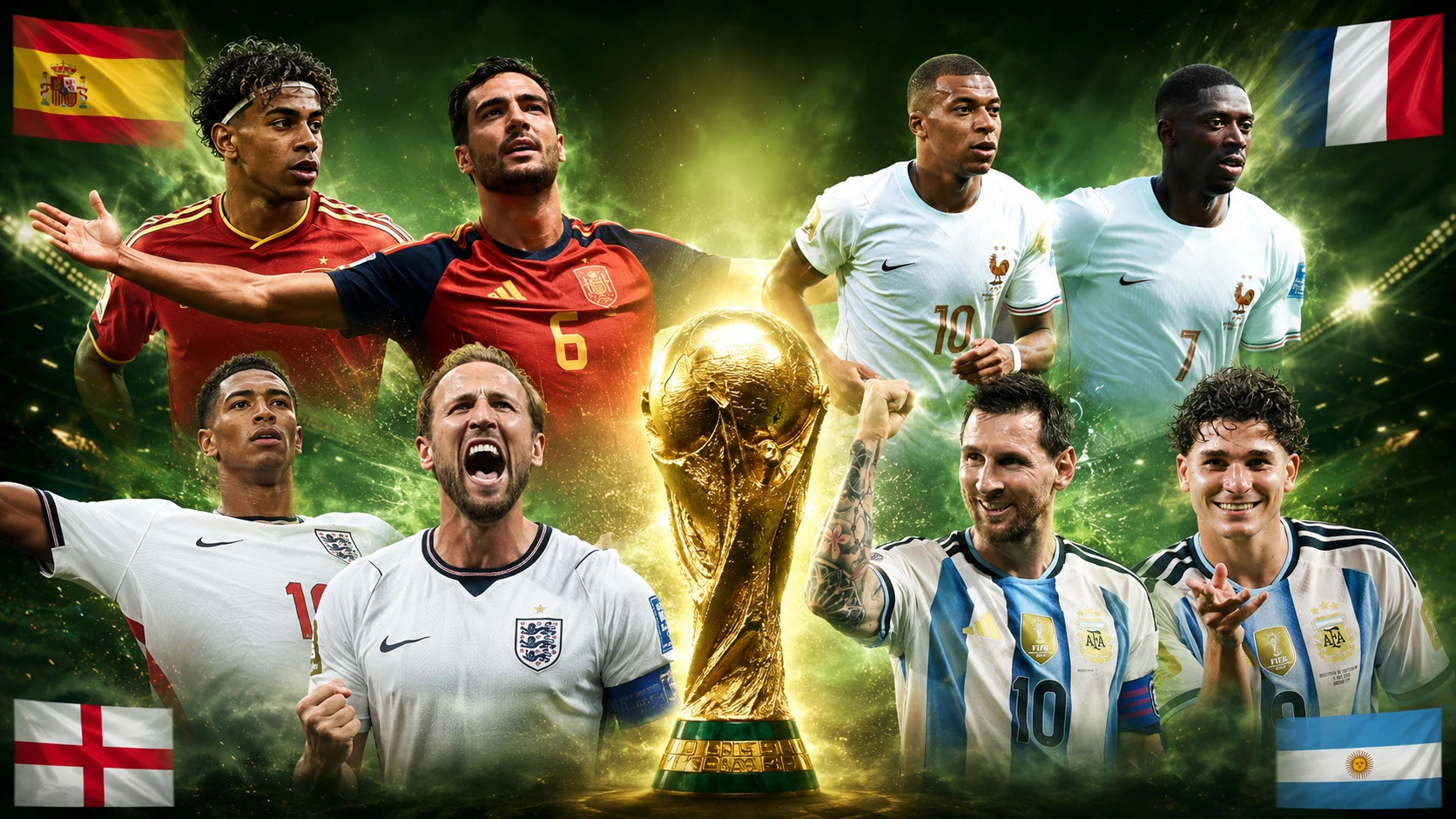
The final top four were therefore:
Champions: Spain
Runners-up: Argentina
Third place: England
Fourth place: France
The official 2026 World Cup award winners
The tournament’s principal individual honours were:
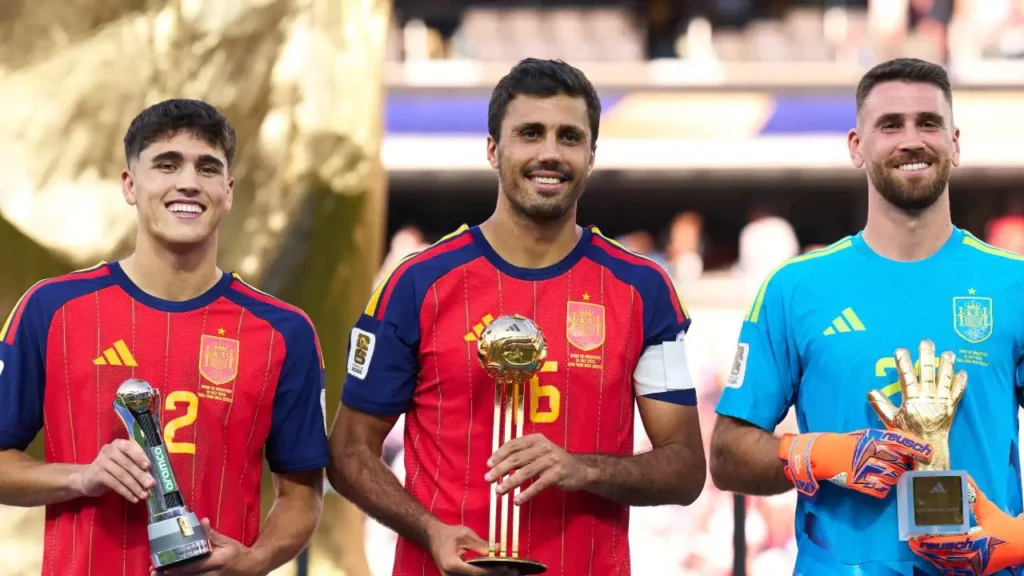
Golden Ball: Rodri – Spain
Silver Ball: Lionel Messi – Argentina
Bronze Ball: Kylian Mbappé – France
Golden Boot: Kylian Mbappé – 10 goals
Silver Boot: Lionel Messi – 8 goals
Bronze Boot: Jude Bellingham – 7 goals
Golden Glove: Unai Simón – Spain
FIFA Young Player Award: Pau Cubarsí – Spain
FIFA’s official post-final awards report did not identify a recipient of the FIFA Fair Play Trophy at the time this summary was completed. No winner has therefore been inserted without confirmation.
What the 2026 World Cup will be remembered for
The first 48-team World Cup will be remembered for its unprecedented scale, its 104-match calendar, packed stadiums across Canada, Mexico and the United States, Argentina’s attempt to defend their crown, England and France’s extraordinary bronze final, and Mbappé becoming the competition’s leading goalscorer.
Above everything, however, it will be remembered for Spain.
They arrived with young talent, technical confidence and a clear footballing identity. They departed with the strongest defence in World Cup history, the tournament’s best player, best goalkeeper and best young player, and the trophy itself.
For the next four years, the final image of 2026 will be that of a Spanish team whose patience never became hesitation, whose control never became caution, and whose reward arrived through Ferran Torres in the 106th minute.
Read the Previous Related Contents in Blog: Sports